Get Full Government Meeting Transcripts, Videos, & Alerts Forever!
Get email alerts on the Person Centered Care topic
No spam. Unsubscribe anytime.
Panel: person-centered MDTs balance autonomy and safety in complex elder cases
Summary
Los Angeles County MDT panelists described intake forms, follow-up practices and two case studies showing how teams weigh client wishes against safety risks; in one case advocates improved conditions without prosecution, and in another conservatorship of the estate was recommended to protect finances.
Dr. Laura Mosqueda, the session's lead presenter, said multidisciplinary teams (MDTs) must elicit and use a client's values and preferences to guide care even when cognitive impairment complicates decisions. "Person-centered care means that we elicit the values and preferences, use them to guide aspects of their health care," she said, citing an American Geriatrics Society definition.
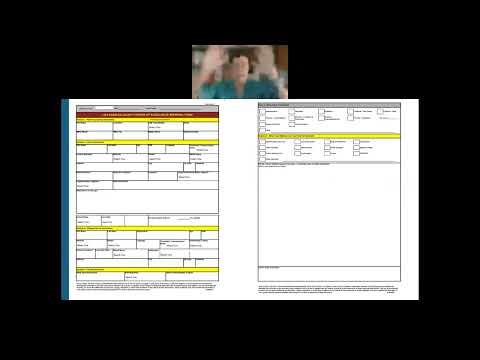
The panel, convened by the Los Angeles County Center of Excellence, described an online two-page intake form that asks responders to record functional and cognitive status, alleged abusers, agencies involved and, importantly, "the client's goals and wishes," a field the team added to keep client priorities central to planning.
Panelists worked through two illustrative cases to show how person-centered principles play out in practice. In the first, a 38-year-old woman with multiple sclerosis lived in a home the team described as "filthy, infested with cockroaches" while receiving about $2,800 a month in benefits. Clinicians reported that the woman "was very able to talk through and be articulate about what her wishes were," and that she told the team she preferred to stay home because she feared her children would be abandoned in a nursing-home placement. Mosqueda said the team discussed capacity and safety but decided "we're not going to push prosecution now" and instead pursued harm-reduction steps, including re-engaging Child Protective Services for supports and assigning an advocate to work with the husband/caregiver to access services and better manage household funds.
Miles, a panelist who provided a case update, said follow-up from the advocate showed the household and the client's care improved and that home health services had begun.
The second case involved an 83-year-old man who wanted to return home to live with two grandsons who had prior convictions and a history of financially exploiting him. The team reported nearly a dozen prior APS (Adult Protective Services) referrals. To protect the elder's finances while preserving his decision-making about medical care and residence, the team referred the client to the Public Guardian for conservatorship of the estate only; panelists said that approach attempts to "button up" finances while allowing the client to retain autonomy over other life decisions.
Panelists repeatedly described the central trade-off in MDT work: respect for self-determination when an individual has capacity versus the need to act when imminent safety risks exist. Speakers said teams routinely gather background information (criminal history, housing stability, service access) and discuss risk as a group rather than relying on a single assessor. The Center reported routine follow-ups at two weeks, six weeks and two months to make sure cases do not fall off the radar.
Renee Rose, who addressed prosecution and diversion strategies, said building relationships and considering diversion or treatment can align prosecutorial goals with the elder's wishes and the larger safety objective. "If we can fix that problem and they do come back to the home, then we've created a safer environment," she said.
Panelists also flagged implementation details that attendees asked about: the MDT intake form does not replace APS referrals; it is an online tool that can be completed in paper if needed and is intended to be completed prior to meetings so team members can research cases in advance. The team noted it sometimes pulls in specialists (domestic-violence advocates, regional health system contacts, ombudsmen) when a case needs that expertise.
The session closed with a reminder that relationship-building across agencies and with clients takes time, and that person-centered practice requires ongoing attention rather than one-time interventions. Mosqueda encouraged attendees to try one or two small changes at their next MDT meeting and offered to share the team's intake form and materials.