Get Full Government Meeting Transcripts, Videos, & Alerts Forever!
Get email alerts on the School Meals topic
No spam. Unsubscribe anytime.
Chartwells director outlines menu changes and participation targets for Albert Lea Public School District
Summary
Chartwells food-service director Carrie Rubish told the Albert Lea Public School District School Board about new menu options, student advisory groups, incentive programs and equipment plans intended to raise breakfast and lunch participation; she cited a November peak of 39% breakfast and 93% lunch.
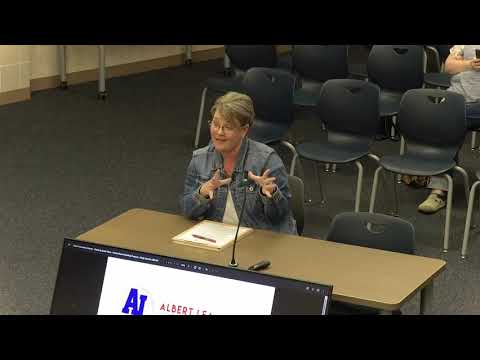
Carrie Rubish, Chartwells' food-service director for the Albert Lea Public School District, told the school board during a study session that the district has expanded menus, started student advisory groups and will pursue equipment upgrades to improve meal quality and participation.
Rubish, who said she has worked in child nutrition for more than 15 years, described outreach and student engagement strategies that staff used this year. "We put together a little advisory group and we've met once a month and get suggestions from them," she said, adding that the group lets staff explain what federal and state meal rules allow. She said student-choice days and focus groups help gauge preferences while staying in compliance with USDA and state rules.
Rubish gave participation figures and goals: "the highest percentage that we had for students eat this year so far for breakfast was 39%" (November), with a breakfast goal closer to 45%. She said lunch reached 93% in November and the districtwide year-to-date lunch average was about 67%, with an aspirational target of roughly 74–75% at secondary levels.
To broaden options and speed service, Rubish said the district installed a new dish machine and a six-foot open-air merchandiser at the high school and added an independent salad-bar line at the middle school. She also described incentive programs such as a "lucky tray" giveaway and commodity-funded produce events: "we had about $70,000 in there this year and we were able to bring in fresh strawberries," she said, describing a National Strawberry Day distribution that drew strong student response.
Rubish noted regulatory constraints on menus, including USDA reductions in allowable sodium levels, and the importance of matching menus to equipment and transport realities. She said food transported from Southwest Middle School to a site referred to in the transcript as "Sibi" can lose heat in transit — "temperature can drop 10, 15, sometimes 20°" — and that adding temperature-controlled serving lines at elementary schools is a priority.
On allergies and special diets, Rubish estimated the number of students with food allergies while noting she did not have a precise count: she said Southwest has "10 or 12 students with food allergies" and that most elementary buildings see about "8 to 14 per building," including cases with multiple allergens. "That's something very near and dear to my heart because I have a child that has ... life-threatening food allergy," she said, emphasizing the need for conversations with parents about safe options.
Rubish invited board members to visit meal service days and said menus are set from Chartwells' recipe pick list but selected locally: "I do the menus, but it's a ... recipe pick list basically," she said.
The presentation concluded with board members' brief questions about where ALC meals are prepared, menu customization and common allergy accommodations. Rubish thanked the board and left the meeting after the presentation.