Get Full Government Meeting Transcripts, Videos, & Alerts Forever!
Get email alerts on the Community Survey topic
No spam. Unsubscribe anytime.
Survey: San Marcos residents rate parks and safety highly but flag economy, mobility and affordable housing as priorities
Summary
City presentation of the 2025 National Community Survey showed strong ratings for the natural environment, parks and safety but identified utilities, economy and mobility as the largest quality–importance gaps; staff said 225 randomly sampled mail responses (7% response rate) were weighted to reflect city demographics, and an additional 1,095 open online responses are available separately.
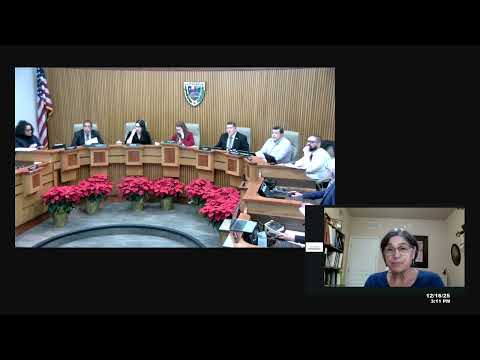
City staff presented results of the 2025 National Community Survey to the San Marcos City Council on Dec. 16, showing residents continue to rate the city highly as a place to live while expressing concerns about economic and mobility issues.
"About eight in 10 residents positively rated San Marcos as a place to live," said Grace Arnison, the survey contact with PCO/National Research Center, summarizing the main findings. Arnison told the council the study combined a mail-based random sample (225 completed surveys, a 7% response rate, margin of error ±6.5 points) with a separate open online survey that drew 1,095 responses.
The presentation highlighted that natural environment, parks and recreation, and safety scored above or near national benchmarks, while economy, mobility and the availability of affordable housing were relatively weak. Arnison said the survey uses benchmark comparisons and a "quality–importance gap" to help identify policy priorities; utilities, economy and mobility showed some of the widest gaps.
Director of Communications Lauren Surley said the city plans to use the survey results in upcoming visioning and budgeting work. "This allows us to evaluate progress since 2022 and ensure future planning and investments align with the evolving priorities of San Marcos residents," Surley said.
Council members pressed staff on methodology. "So out of the 3,500 mailed invitations, we received 225 survey responses back," asked one councilor; Arnison confirmed the sample and explained that the random-sample results were weighted against American Community Survey and census demographics to better reflect the city's population, and that multifamily households were intentionally oversampled.
Council members also asked for geographic and online-data breakdowns. Arnison said neighborhood-level results and interactive comparisons are available in the online Tableau dashboard and offered to provide area-specific tables and the open-response report.
The presentation included several custom questions. Residents said they frequently leave the city for grocery shopping and prioritized the city pursuing more grocery stores, family entertainment and casual dining. Opinions on possible paid downtown parking were mixed: about two-thirds said paid parking might improve availability and turnover, while roughly half said paid parking could negatively affect businesses.
City staff recommended council use the NCS findings as background for the council's upcoming visioning workshop and said they would provide further qualitative feedback gathered during town halls to complement the survey data.
The council did not make any formal policy changes at the session; staff were asked to circulate interactive results and to include NCS findings in the visioning materials and budget discussions.