Get Full Government Meeting Transcripts, Videos, & Alerts Forever!
Get email alerts on the Land Development topic
No spam. Unsubscribe anytime.
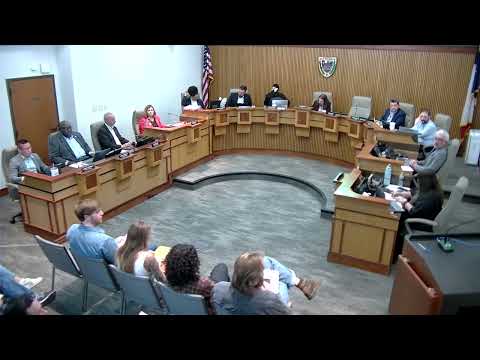
San Marcos council postpones land‑development code vote after weeks of public outcry over data centers
Summary
After hours of public comment and a lengthy staff presentation, San Marcos City Council postponed consideration of comprehensive land‑development code changes — including new rules that would create a distinct "data center" use — and set a March 31 deadline for council amendment submissions and an April 21 return date.
SAN MARCOS, Texas — The San Marcos City Council postponed a major package of land‑development code amendments on Tuesday after repeated public objections to provisions that would add "data center" as a distinct land‑use and make it conditionally allowed in business‑park and light‑industrial zones and permitted in heavy industrial areas.
Staff presentations by the planning division laid out more than 300 edits to the code and design manual, including a new definition of "data center" and site‑and‑screening standards. Planners told the council the proposed change is intended to clarify where a data center fits in the land‑use table; critics said the change creates a new pathway for large, water‑ and power‑intensive facilities to locate near residential neighborhoods.
During a combined presentation that lasted more than an hour, planning staff summarized outreach and revisions that followed earlier public input. The packet included language making data centers a conditional use (subject to a conditional‑use permit) in business park and light industrial zoning and permitted in heavy industrial zoning.
Residents, environmental advocates and neighborhood speakers used a multi‑hour citizen comment period to press council members to prevent data centers from being classified in business parks or light industrial zones, to require robust conditional‑use reviews, and to reserve final approval for the elected council rather than delegating it to an appointed planning and zoning commission.
"Do not put data centers under business park," said one speaker at the podium, who argued the facilities could ‘‘deplete our water’’ and introduce long‑term health and noise risks. Others called for strict limits on potable water use, stronger air‑quality and noise restrictions, and mandatory public disclosure of operators and hosted data so residents can hold companies accountable.
Council members asked staff to prepare a more accessible summary of the proposed edits and to post answers to key legal and procedural questions raised by residents. Rather than proceed with an ordinance vote, the council voted to postpone the item to an April 21 meeting and set March 31 as the council’s internal deadline for submitting proposed amendments and receiving staff analysis.
The postponement passed 6–0 with one member absent. Council members said the extra time is intended to let staff prepare a clearer side‑by‑side of the proposed changes, to publish any staff‑recommended corrections, and to allow councilors to circulate suggested amendments publicly beforehand so residents can review them.
What happens next: Council members and staff will post proposed amendment language and a short Q&A on the city's message board and website. Officials said they want the public to have time to digest changes and to provide feedback before the April 21 meeting.
Why it matters: Residents and activists said the stakes are high because data centers can require very large amounts of power and, in many designs, significant quantities of water for cooling. The debate reflects a broader regional and national conversation about where to put new energy‑ and water‑intensive infrastructure and who should have final say over siting decisions.
Council members emphasized they were not ending the conversation but seeking to buy time to make the technical record clearer and to give elected officials an opportunity to craft amendments. Planning staff said they will return with redline corrections, the staff‑recommended amendments discussed during the February Planning & Zoning process, and answers to the most frequently raised public questions.