Get Full Government Meeting Transcripts, Videos, & Alerts Forever!
Get email alerts on the Historic Preservation topic
No spam. Unsubscribe anytime.
San Marcos historic preservation plan draws praise and calls for a "phase two" implementation
Summary
City staff presented the draft Historic Preservation Plan, describing five focus areas and a small National Trust matching grant; council and commenters asked staff to return with a comprehensive memo identifying which public recommendations are already incorporated, which require implementation funding, and which should be deferred to a phase two workplan.
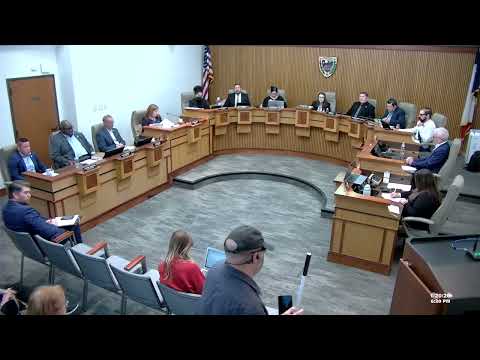
City staff and consultants presented San Marcos'9 first Historic Preservation Plan on Jan. 20, emphasizing that adoption would create a guiding, non-regulatory framework for future preservation work rather than immediate designations or funding commitments.
"The historic preservation plan is a policy and guidance document similar to a comprehensive plan," said Allison Break, the city'9s historic preservation officer, noting that the project included extensive outreach, a bilingual survey of more than 400 respondents, and a $5,000 matching grant from the National Trust for Historic Preservation that requires formal adoption by the end of February.
The plan organizes recommendations into five focus areas: administration, survey and recognition, economic development, signage and wayfinding, and engagement and education. Staff described an implementation matrix and recommended establishing a council-appointed oversight committee to translate the plan into annual work items.
During a lengthy council discussion and public comment period, community members and Preservation Texas urged more specificity on neighborhood character studies, enforcement of "demolition by neglect," accuracy of some historic property attributions, and a stronger implementation checklist. Ryan Patrick Perkins, a local preservation advocate, urged council to invest additional resources and not "settle" for a superficial product after the city has already spent significant consultant funds.
Staff told council it could return with a comprehensive memo before the next meeting to (1) identify which emailed or message-board comments are already incorporated, (2) flag factual corrections and typos for immediate fixing, and (3) classify other suggestions as either (a) simple text edits, (b) additional implementation work that could be scheduled as "phase two," or (c) items requiring new funding. Council directed staff to prepare that memo and post it on the city message board ahead of the next hearing.
What happens next: staff will prepare the requested memo and return the plan to council for formal adoption once the council is satisfied with remaining factual edits and the proposed approach to implementation.