Get Full Government Meeting Transcripts, Videos, & Alerts Forever!
Get email alerts on the Annexation topic
No spam. Unsubscribe anytime.
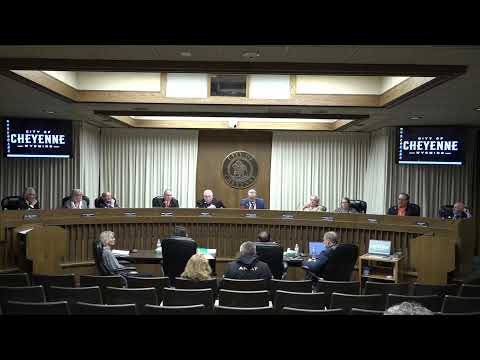
Cheyenne delays annexation of family farm after weeks of public outcry; council sets Nov. 9 date to reconvene
Summary
After hours of testimony from hundreds of residents, vendors and state lawmakers, Cheyenne’s council postponed third‑reading action on a multi‑parcel 'pocket' annexation that would have included a working family farm and farm stand. The council set a date‑certain review for Nov. 9, 2026 and directed staff to work on codifying an "urban farm" land‑use standard.
The Cheyenne governing body on March 9 postponed a contested annexation that would have incorporated multiple privately owned parcels surrounded by city limits, including a family‑run farm and year‑round farm stand, until Nov. 9, 2026.
Planning director Charles Bloom told the council the annexation is part of a multi‑year county‑pocket program. He said the city had used a policy statement to interpret "urban farm" uses to date but did not yet have a codified land‑use category; that gap and the potential for new inspection and site‑plan requirements fueled owners’ concerns.
Tommy Nicely, who identified himself as the owner of WFresh Farm, asked council to exclude his property from annexation and to delay city action until the city adopted clear, written rules governing urban farming. "Please don't annex my farm," Nicely told the council, asking for time to understand how annexation would affect animals, sales and seasonal structures used on the farm.
More than 60 residents, vendors and customers — and several state representatives — came to the podium. Testimony described how the farm supply chain and a year‑round farm stand serve neighbors, provide food access for people with special dietary needs, and host dozens of local vendors who rely on the stand to reach customers. Supporters urged the council to either remove the parcels or delay so the city and owners could negotiate clear, enforceable rules.
Opponents of annexation argued that state law (the Wyoming Right to Farm and Ranch Act) protects pre‑existing farm operations and that municipal code provisions regarding animals, fencing and site plans could endanger the farm’s viability or require costly upgrades. Legal advisers for the farm warned that annexation before codifying urban‑farm rules could invite litigation and urged the council to carve the farm out or postpone action.
Council action: Several amendments to exclude the farm parcel(s) were proposed but failed to pass. The governing body ultimately adopted a date‑certain postponement, returning the matter to public services committee and placing third and final reading back on the calendar for Nov. 9, 2026. The council’s postponement gives staff time to draft a formal urban‑farm code and for owners and departments to negotiate operational details.
Next steps and local stakes: City staff told the council they would need months to draft conforming code changes, with planning estimating a minimum of roughly six months to draft, vet and take a text amendment through planning commission and council. Owners and supporters asked for at least eight months to avoid disrupting the current production season and to allow time for fence repairs and other practical measures; some urged a longer delay or removal of the parcels from the annexation entirely. Attorneys on both sides warned that unresolved legal questions — including whether municipal rules would conflict with state protections — could produce litigation if the council attempted final adoption before those uncertainties were resolved.
What to watch: Council direction implies staff will draft a neighborhood‑tailored 'urban farm' land‑use category and procedures; residents and the owners expect repeated public hearings and close committee scrutiny before any final annexation vote.