Get Full Government Meeting Transcripts, Videos, & Alerts Forever!
Get email alerts on the Pbm Practices Pharmacy Access topic
No spam. Unsubscribe anytime.
Lawmakers Hear Pharmacists Say PBM Practices Are Driving Michigan Pharmacy Closures
Summary
At a House Subcommittee hearing, pharmacy owners and the Michigan Pharmacists Association told lawmakers that pharmacy benefit manager (PBM) pricing, audit and reconciliation practices have left independent and rural pharmacies operating below cost, arguing the 2022 PBM law and current DIFS enforcement leave gaps that must be fixed to protect patient access.
At a House Subcommittee on Public Health and Food Security hearing, pharmacists and independent pharmacy owners told lawmakers that pharmacy benefit managers’ contracting and audit practices are forcing community pharmacies in Michigan to cut services or close, jeopardizing local access to medications and counseling.
Eric Roth, director of government affairs for the Michigan Pharmacists Association, told the committee the Pharmacy Benefit Manager Licensure and Regulation Act of 2022 established important protections—banning certain clawbacks, restricting extrapolation in audits, and requiring transparency—but that DIFS’s interpretation and enforcement have allowed PBMs to continue recouping payments and imposing financial risk on pharmacies. “This somehow makes it legal,” Roth said, describing how broad “true-up” reconciliations and PSAO (pharmacy services administrative organization) arrangements have been treated as outside the statute’s prohibitions.
Roth walked lawmakers through a complaint timeline in which a PSAO notified a pharmacy of an $11,000 recoupment in March 2024; the pharmacy filed to DIFS on April 4; the claim was followed by multiple inquiries and a total exposure that reached $33,000 before DIFS concluded it could not find a violation because the PSAO fell outside the PBM definition. Roth urged the Legislature to revisit the 2022 act to close loopholes, give regulators faster enforcement tools and consider transferring oversight to an agency with broader jurisdiction.
Committee members pressed Roth on technical points including how PBMs set reimbursement (common formulas include AWP-minus or MAC lists), the role of NADAC (national average drug acquisition cost) in estimating acquisition prices, and the effect of manufacturer rebates on list prices. Roth cited a unanimous U.S. Supreme Court ruling addressing Arkansas’s Act 900 to say states can regulate PBM practices that affect costs so long as the law does not dictate plan design, and argued Michigan’s statute could be clarified to better reach abuses tied to PSAOs.
Local owners gave concrete examples. Steve Jensen of Jensen’s Community Pharmacy described extensive administrative burdens—step therapy, prior authorizations, MAC appeals and frequent retrospective reconciliations—that consume staff time and threaten otherwise lifesaving local services. “We’re often the first point of contact for our patients in the health care system,” Jensen said; he and other owners recommended a NADAC-plus-dispensing-fee model and stronger enforcement against retroactive recoupments.
Jordan Marchetti, owner of TDS Inc., said his three rural pharmacies have been under-reimbursed by about $350,000 since 2022, primarily tied to effective-rate contract reconciliations with Optum Rx and, to a lesser extent, CVS Caremark. Marchetti said he provided detailed claims data to DIFS but received a ruling that DIFS had no jurisdiction because PSAOs are not licensed insurance entities and recommended pursuing counsel or litigation to proceed.
Heather Russell, co-owner of Central Pharmacy in Perry and Williamston, described how a local Rite Aid closure left her store as the only pharmacy within a 10–12 mile radius. After switching to a rural contract with Express Scripts (ESI), she said patient copays rose and many customers were steered to the PBM’s mail-order pharmacy. Russell described repeated audits and “investigations” concentrated on high-dollar claims and said the time required to respond (40–80 hours per review) is forcing staffing cuts and reducing clinical services available locally.
Witnesses emphasized how mandatory or default mail-order provisions and opaque true-up reconciliations undermine local access, and they urged reforms that would require clearer reporting of acquisition costs (improving NADAC participation or separate reporting for independents), bar indirect recoupments through PSAOs, speed DIFS complaint resolution, and include meaningful penalties for noncompliance. Several witnesses said ERISA preemption should not be treated as a blanket bar to regulation and that properly tailored state rules can survive federal challenges.
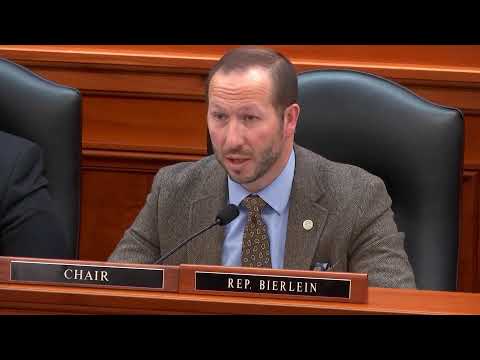
The committee did not take a vote on policy changes at the hearing. Chair Beerline said DIFS is expected to testify at the next meeting, and the committee will continue the conversation. The hearing transcript shows multiple specific examples of alleged recoupments, a DIFS written response date cited by witnesses (April 30), and a request from witnesses for legislative fixes to preserve access in rural and underserved communities.