Get Full Government Meeting Transcripts, Videos, & Alerts Forever!
Get email alerts on the Tribal Sovereignty Service Areas topic
No spam. Unsubscribe anytime.
Committee declines to refer bill that would exempt tribes from utility service territories
Summary
The Energy Finance and Policy Committee heard testimony from a tribal chairman and utility leaders about House File 3458, which would exempt tribes from exclusive utility service territories; members debated sovereignty versus grid reliability and the motion to refer the bill to the General Register did not prevail.
The Energy Finance and Policy Committee debated House File 3458, a proposal to exempt tribal lands from utilities' exclusive service territories, after testimony from tribal leaders and utility officials.
The sponsor, Representative Cherry, said the bill is a legislative fix prompted by a conflict involving a tribal casino solar project and the Minnesota Valley cooperative. "This bill ... exempts tribes from the exclusive rights and assigned service areas for utilities," Cherry said, framing the measure as intended to protect tribal sovereignty.
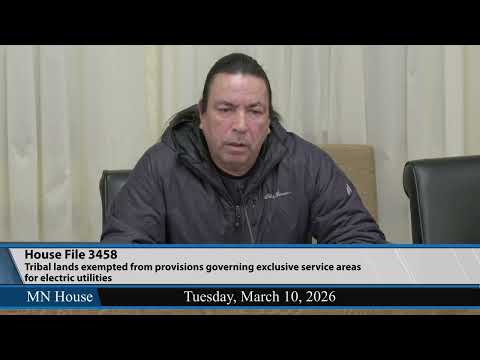
Kevin (Kev and Jen Sullivan), who identified himself as tribal chairman of the Upper Sioux community, told the committee the dispute goes beyond solar and is fundamentally about tribal sovereignty and legal precedent. "This is not about solar. This is about sovereignty," he said, urging lawmakers to recognize the tribes' authority within their exterior boundaries and to consider the historical context that led to current statutory gaps.
Utility witnesses urged caution. Derek Mold, introduced as president and CEO of a rural electric association, warned the bill "would open established electric service territories within Minnesota's Indian nations to multiple service providers" and said that could undermine the regulatory compact, coordinated long-term planning and reliability, ultimately raising costs for consumers.
Justin Johnson of East Central Energy described existing cooperative partnerships with tribal nations and said the Minnesota Valley dispute does not represent the majority of cooperative-tribal relationships. "We built a strong, productive relationship" with tribal partners for a 3-megawatt solar facility, he said, urging tailored solutions rather than broad statutory change.
Members questioned whether the Public Utilities Commission was already addressing the specific dispute and whether legislative action would circumvent that process. Chair Swedzinski and members noted the PUC is considering issues in related dockets but that the legislature can pursue complementary approaches.
The committee conducted a roll call on the motion to refer House File 3458 to the General Register; the clerk announced the result and the motion did not prevail. No further action was taken on the measure at that meeting.
The committee moved on to other bills on its agenda.