Get Full Government Meeting Transcripts, Videos, & Alerts Forever!
Get email alerts on the Public Health Kratom Regulation topic
No spam. Unsubscribe anytime.
Boston council committee hears emotional testimony and weighs local ban on kratom sales
Summary
On March 9, 2026 the Boston City Council Committee on Public Health, Homelessness and Recovery held a hearing on Docket 0175 to consider regulating or banning kratom; public health officials described health and supply-chain risks while bereaved parents told personal stories urging a full ban. Councilors directed staff to pursue ordinance language and a working session on enforcement and permitting.
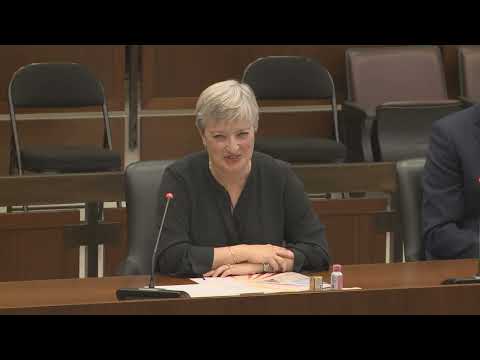
Chair John Fitzgerald on March 9 opened a City Council Committee hearing (Docket 0175) on whether Boston should regulate or ban the retail sale of kratom, an herbal product and its synthetic derivatives that panelists and public commenters said is increasingly available in smoke shops, convenience stores and online.
Deputy Commissioner PJ McCann of the Boston Public Health Commission told the committee kratom is derived from a Southeast Asian tree and can produce stimulant effects as well as opioid-like sedation. "Given the current state of the science VFC recommends against kratom use for any reason," McCann said, adding that products marketed as kratom or containing synthetic derivatives such as "70H" raise concerns about contamination, potency and misleading health claims. He urged a mix of steps including public education, retailer notice and inspection and a working session to draft ordinance language.
Several medical and recovery experts described clinical harms and detection challenges. Dr. Sela, a retired physician who has treated patients in Lowell, recounted cases he said demonstrate that high-potency synthetics and unregulated products can cause liver toxicity, respiratory depression and severe withdrawal. He warned that kratom use complicates anesthesia care and can trigger neonatal withdrawal in infants of people who use these products.
The hearing drew multiple emotional testimonials from bereaved family members who urged an outright ban. "I lost my only child, my 25-year-old son Tyrrell," Holly Travel testified, saying his death certificate listed a kratom product as the sole cause of death. Susan Cave told the committee her son William died after consuming kratom in combination with prescribed antidepressants. Dan Gibbs said the medical examiner certified his son Austin's death as kratom toxicity and that toxicology did not identify fentanyl or other opioids.
Peter (who identified himself as the president/CEO of a recovery nonprofit) and neighborhood advocates described kratom's growing retail footprint and the difficulty of detecting kratom in routine drug screens. Bob Barney of the Claremont Neighborhood Association and Steve Fox, chair of the South End Forum, urged the council to consider local bans, community notification when retailers add risky products, and changes to licensing and zoning to prevent easy youth access.
Councilors pressed panelists on next steps. Deputy Commissioner McCann said an ordinance adopted by the council could be enforced like other city laws but recommended pairing legislative action with education and existing inspectorate efforts (tobacco inspectors, ISD referrals). Multiple councilors urged a working session to draft ordinance language that is "future‑proof" against evolving state or federal rules and to involve Inspectional Services Department and licensing staff so retail permitting and zoning are considered alongside any ban.
No vote was taken at the hearing. Committee members signaled broad interest in pursuing an ordinance and coordinating with state and federal efforts (witnesses and councilors referenced a pending DEA/Controlled Substances Act review and a state House bill) while acknowledging enforcement and legal nuances. The committee closed the hearing after asking staff to convene a working session and return with draft language and enforcement options.
The committee adjourned with next steps: staff to schedule a working session on ordinance language and enforcement coordination; no formal ban was enacted at the March 9 hearing.