Get Full Government Meeting Transcripts, Videos, & Alerts Forever!
Get email alerts on the Local Budget topic
No spam. Unsubscribe anytime.
Matanuska-Susitna Assembly adopts 2026–27 budget after heated school funding fights; mill rate set at 7.955
Summary
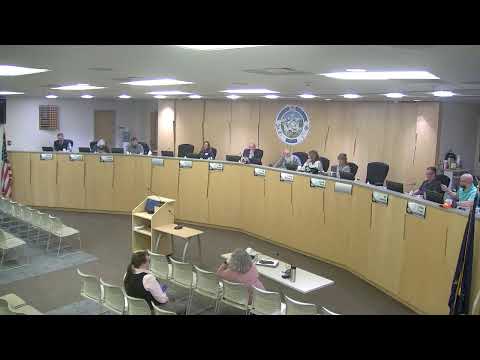
The Matanuska-Susitna Borough Assembly adopted Ordinance 26-026 on May 7, 2026, approving the FY2026–27 budget and setting an areawide mill rate of 7.955 and non-areawide rate of 0.160 after amendments that reallocated capital spending to school operating funds and added targeted grants. The meeting’s fiercest debate centered on funding to avert school closures and how to balance operating needs with capital projects.
The Matanuska-Susitna Borough Assembly voted to adopt the 2026–27 budget (Ordinance 26‑026) on May 7, approving an areawide mill rate of 7.955 and a non‑areawide rate of 0.160.
The ordinance passed after a night of detailed amendments that moved money between capital and operating funds, added community grants and transit support, and sought to blunt proposed school closures. Assembly Member Maxwell Sumner successfully moved an amendment to transfer roughly $1.56 million from a Taletina Elementary roof project into the school operating fund so the district can retain classroom teachers; Sumner argued the shift would lower the mill rate by 0.015 and help preserve student-teacher ratios. "This will reduce the mill rate by 0.015," Sumner said when describing his amendment.
Supporters of reallocating capital funds said the move targets classroom stability, while opponents warned that moving capital to operating sets a difficult-to-reverse precedent. Dean McGee, a member of the Assembly, voiced frustration at the district’s budget process: "I don't understand this. I really don't," he said, pressing administrators about recurring budget shortfalls and high administrative costs.
School administrators told the Assembly the district faces additional, unexpected costs this year. Katie Gardner, deputy superintendent for the Matsu School District, said the Taletina roof need is longstanding and that a one‑year delay would not cause a major escalation in repair costs. "I wouldn't anticipate an escalation of costs based on a year's delay," Gardner said, while cautioning that there are active leaks and ongoing maintenance.
Superintendent Randy Triny told members the district welcomed additional revenue but emphasized the board must still deliberate its priorities. He said the district had seen an increase in projected health‑insurance costs that widened its structural deficit, complicating any simple fix.
Assembly members introduced separate amendments aimed specifically at preventing closures at individual schools. One sought $1.59 million for Larson Elementary; another proposed creating a $2.27 million reserve to keep Metal Lakes Elementary open. Administration officials explained how the reserve would be held in borough fund balance and require separate assembly action to release to the district. Triny warned that the district’s deficit and insurance increases meant additional one‑time borough dollars might not be sufficient by themselves to restore long‑term budget stability.
Other adopted measures included: - $140,000 for Glacier View to keep a former school building operating as a community center (amendment later reconsidered and passed). - $250,000 added to Valley Transit operations to sustain service amid rising fuel costs and to expand demand‑response and regional routes. - Smaller community grants and program reallocations, including support for youth invasive‑species outreach and a school-centered hunter‑education initiative.
After votes on individual amendments, the Assembly set the final rates and adopted the ordinance that formalizes FY2026–27 appropriations and rates. The budget passed following roll calls and extended debate; the clerk recorded the ordinance as adopted.
What happens next: the Assembly’s action sets borough tax rates and appropriations for the coming fiscal year; most amendments funded programs by moving existing budget authority rather than adding a large ongoing levy. Some of the school-specific measures placed money in reserves or required separate legislative steps to transfer funds to the district, so final disbursement depends on later formal actions.
The Assembly recessed and signaled the budget would be revisited only if members moved to reconsider before the statutory deadline for adoption.