Get Full Government Meeting Transcripts, Videos, & Alerts Forever!
Get email alerts on the Transportation topic
No spam. Unsubscribe anytime.
Muscogee council approves ODOT agreements and utility relocation plan for Highway 69 widening
Summary
The City of Muscogee authorized a suite of agreements with the Oklahoma Department of Transportation tied to the Highway 69 widening, including street‑lighting transfer, signal maintenance, city‑funded corridor improvements and a planned utility relocation estimated at $5 million to be reimbursed to ODOT over time.
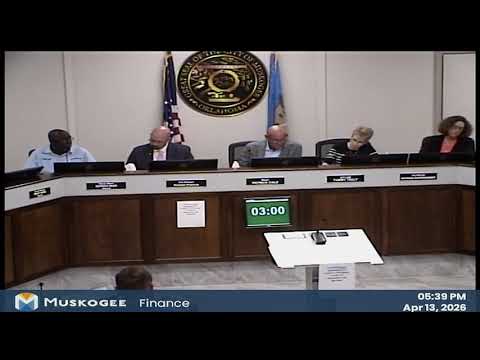
The Muscogee City Council on April 13 approved multiple agreements with the Oklahoma Department of Transportation that clear the way for the planned widening of Highway 69 and related corridor work.
City staff told the council the package includes: replacement of street lighting (with the city remaining responsible for payment), a maintenance and timing agreement for traffic signals, a contract mechanism to add city‑requested roadway improvements into the ODOT project bid, and a plan for relocating city water and sewer utilities that are currently in the roadway.
City staff estimated the utility relocation work at about $5 million and said ODOT will pay initial relocation costs and the city will reimburse ODOT annually on an interest‑free schedule. Staff indicated the city intends to reimburse $500,000 per year until the cost is repaid.
Chris Wallace, district engineer for ODOT, outlined a three‑phase construction sequence and said the project is tentatively scheduled to be bid this summer with construction beginning late in the year. He described a phased traffic management plan that would keep businesses accessible while crews reconstruct and shift lanes.
Councilors discussed the proposals but raised no objections to moving forward; roll‑call votes approved the agreements as presented.
The city said the signal and lighting agreements preserve local control over timing and illumination, respectively, and that including utility relocations in the ODOT contract reduces duplicative mobilization and administrative costs for the city. Staff stressed that specific relocation costs will be firmed by engineer estimates and bids prior to final payments.
Next steps include execution of the ODOT agreements and coordination between city utility crews, ODOT, and the contractor once bids are awarded.