Get Full Government Meeting Transcripts, Videos, & Alerts Forever!
Get email alerts on the CMIR Program topic
No spam. Unsubscribe anytime.
California OKA says 45 transactions reviewed in two years; AB1415 expected to increase filings
Summary
Assistant chief counsel reported OKA has reviewed 45 material‑change notices since April 2024, waved many transactions, and expects AB1415 to increase filings from private equity, MSOs and newly created entities. Staff outlined recent notable waivers and timelines.
The Office of Healthcare Affordability reported an accelerated review workload at its April 21 board meeting, saying it has processed 45 transaction notices across its first two years of activity.
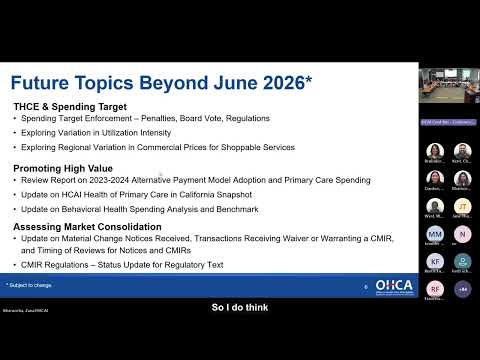
Assistant Chief Counsel Heather Klein Hogensson told the board that OKA began reviewing transactions on April 1, 2024, reviewing 14 in its first year and 31 in the second year. "We've done 45 total transactions," she said, and said the office’s typical waiver review — when no full CMIR is required — averages about 26 working days from completeness to wave.
Staff warned the passage of AB1415 will broaden filings they expect to receive, citing increased scrutiny of private equity, management services organizations (MSOs), hedge funds and entities established solely for specific deals. Klein Hogensson walked the board through a series of recently waved matters, including outpatient imaging purchases, PBM consolidations, hospital affiliation agreements and the ResCare CMIR that recently concluded.
Board members pressed staff on timing for in‑depth CMIRs, noting the ResCare review extended across much of 2025 and into 2026; staff said federal agency reviews (FTC/DOJ) and requests for additional information can toll OKA’s statutory review clocks. Several members urged the office to publish more context about why particular transactions were waved versus those that triggered CMIRs.
OKA said it will continue to coordinate with other state agencies that regulate facility licensing and quality and will post documents associated with CMIRs on its website. The office also plans supplemental notices when transactions raise public concerns about pricing or academic affiliation.