Get Full Government Meeting Transcripts, Videos, & Alerts Forever!
Get email alerts on the Master Plan topic
No spam. Unsubscribe anytime.
MassDEP presents master plan assessment, seeks funding and enforcement gains to hit 2030 waste goals
Summary
MassDEP staff told the Solid Waste Advisory Committee that overall disposal rose about 10% since 2018 — driven by a 50% jump in construction and demolition materials — and outlined grant opportunities, expanded inspection staffing, and an emphasis on outreach and regulation updates to meet 2030 targets.
Sean Silver, of the Massachusetts Department of Environmental Protection, opened the virtual Solid Waste Advisory Committee meeting and introduced program leads. "I'm Sean Silver. I'm from the Massachusetts Department of Environmental Protection. I work in the commercial branch of the solid waste and recycling group," he said at the start of the meeting.
John Fischer, who led the program update, said the department's solid waste master plan assessment shows municipal solid waste has remained roughly flat since a 2018 baseline but that a 50% increase in construction and demolition material pushed overall disposal up about 10 percent. "Our goal was a 30% reduction by 2030," Fischer said, adding that the state has not yet achieved that trajectory.
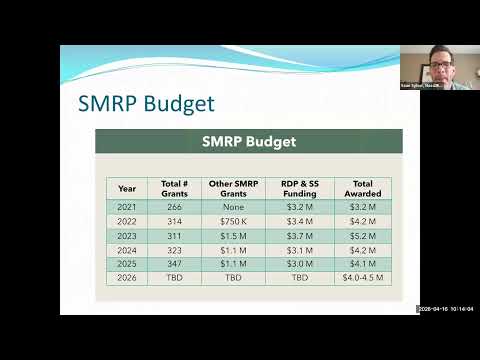
Fischer reviewed four grant tracks: a new Waste Reduction Innovations grant (two categories: startup/pilot and larger capital projects), the Recycling and Reuse Business Development grant (just over 30 applications seeking about $7 million), Reduce Reuse Repair microgrants (awards $3,000'$10,000; applications due May 15), and the Sustainable Materials Recovery program (equipment and planning grants; applications due June 1, 2026). He said category 1 awards under the Waste Reduction Innovations program are near finalization, while larger capital awards will take more time.
On compliance, Fischer said MassDEP has hired additional waistband inspectors, is on track to exceed a master-plan goal of 200 inspections per year, and has seen a modest decline in observed failed-load rates (from 25% to 24% since the 2022 waistband expansion). He described a two-track approach: stepped-up inspections and enforcement plus targeted outreach to businesses, trade associations and local public health officials. "We've been using 'request for information' letters more frequently to gather compliance data and raise awareness," Fischer said.
Fischer also briefed the committee on action items in topic areas including deconstruction and building-material reuse, durable and bulky household goods, single-use food serviceware best practices developed with public-health partners, and an updated organic action plan to drive additional food-waste diversion. He said MassDEP has invested roughly $5 million in food-waste collection and processing infrastructure and that business participation rose from about 2,300 in 2018 to roughly 4,100 in 2024, but he cautioned that progress toward the 2030 food-waste reduction target has largely plateaued and substantial additional investment is required.
On regulatory work, Fischer said MassDEP has completed an internal review of its solid-waste regulations (310 CMR 16 and 310 CMR 19) and plans a rulemaking and public-comment process later this year; the department is also expanding targeted PFAS testing at closed landfills and is exploring approaches to limit CO2 from municipal waste combustion.
Fischer urged committee members and stakeholders to participate in subcommittees and to take advantage of the department's grant and technical-assistance programs. The department will post the presentation slides and a recording on MassDEP's Solid Waste Master Plan page.
Next steps: MassDEP will finalize grant awards where applicable, continue outreach and waistband compliance work, advance the regulatory review through public comment, and pursue legislative funding in the governor's environmental bond bill that includes roughly $28 million for solid-waste priorities.