Get Full Government Meeting Transcripts, Videos, & Alerts Forever!
Get email alerts on the Wildfire Survivors topic
No spam. Unsubscribe anytime.
Survivors urge fast-pay relief and tighter oversight as Assembly examines CEA SB 254 report
Summary
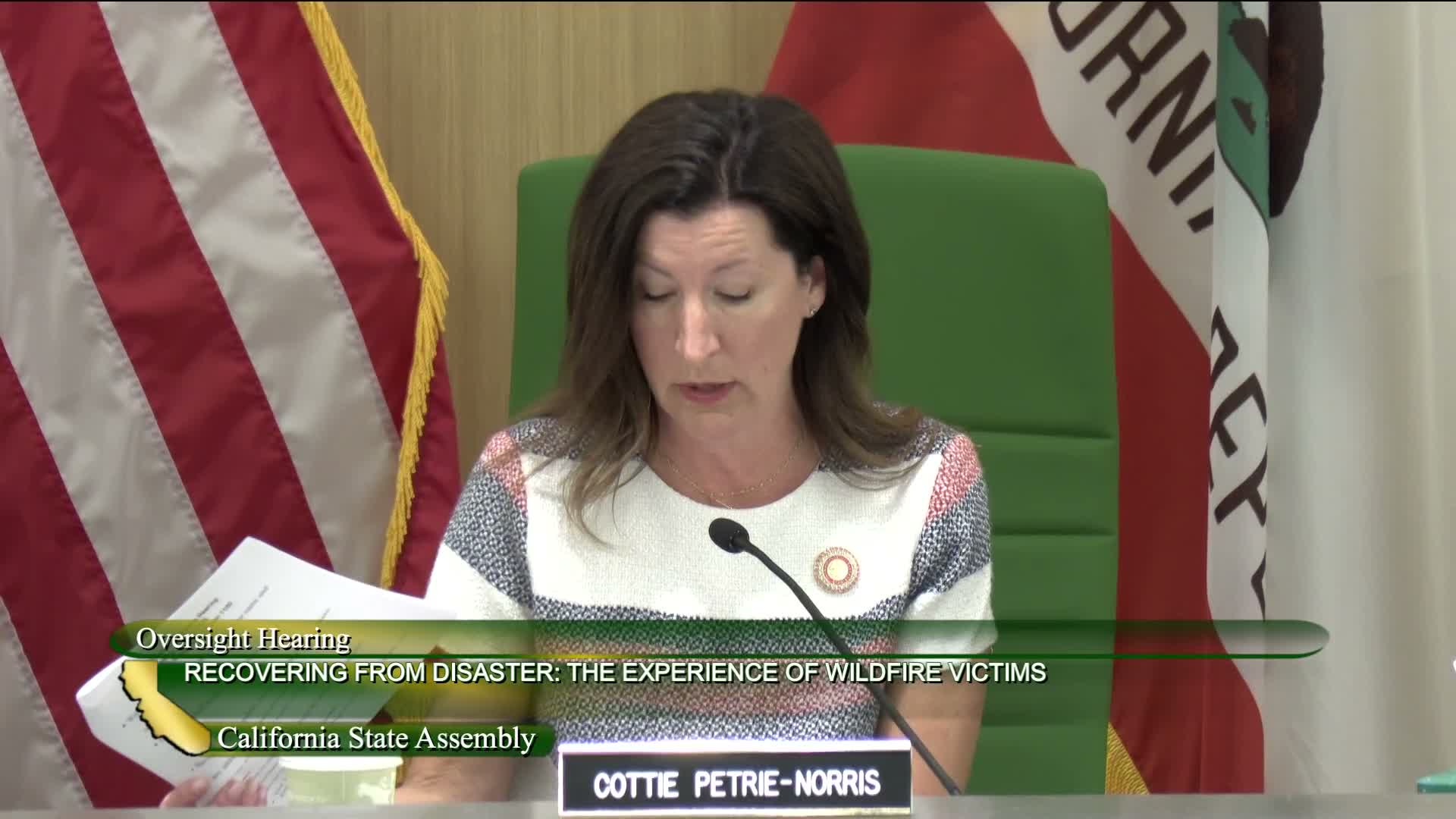
Wildfire survivors told a California State Assembly committee they remain displaced and financially devastated, urging a utility-funded ‘‘fast pay’’ for victims, independent audits of mitigation spending and rejection of proposals that cap non-economic damages.
Will Abrams, a wildfire survivor and organizing advocate with the Utility Wildfire Survivor Coalition, and Joy Chen, executive director of the Every Fire Survivors Network, told the Assembly Committee on Utilities and Energy on Wednesday that survivors from multiple fire seasons remain waiting for full compensation.
They said the system of litigation financing, private intermediaries and complex settlement arrangements has prolonged recoveries and diverted resources. “We must strive for transparency,” Abrams said, urging “complete declarations and financial disclosures” from organizations or individuals that touch public programs tied to wildfire recovery. He told members the Legislature should also align utility incentives — for example linking return-on-equity to safety outcomes — so utilities are rewarded for preventing fires and paying victims promptly.
Chen described survivors’ immediate needs and framed the debate as one of timing and fairness: “Two out of three of us are still not home,” she said, adding that survivors face depleted savings, mounting housing insecurity and rising mental-health crises. Chen criticized what she said were amendments to SB 254 that she and allies view as protecting corporate interests, and urged lawmakers to push Edison to advance “urgent housing relief” so families can avoid homelessness while claims are resolved.
Chen outlined three near-term policy asks: ask Edison to advance emergency housing relief that would be reimbursed through the wildfire fund; pass AB 1774 to require independent audits of utility wildfire mitigation spending; and reject proposals that limit punitive or non-economic damages for victims. She warned that a nominally “fast” compensation program that required survivors to sign away legal rights would leave many with only fractionary recoveries — for example, she said renter payments offered by an Edison program were $25,000 while median renter losses she cited were about $250,000.
Committee members pressed survivors on what a viable “fast pay” mechanism would include. Survivors and advocates said a credible fast-pay system must be “fast, full and fair”: quick disbursements to address urgent housing and living needs, combined with safeguards to ensure payments do not undercompensate victims or force surrender of rights without transparency. Several members also asked whether existing wildfire fund reimbursement rules (which make the fund a reimbursement vehicle) could be adjusted to accelerate survivor access to money.
The hearing highlighted tension between speed and completeness: survivors and plaintiff attorneys warned that too-rapid settlement terms can lock in inadequate payouts; proponents of fast-pay models said carefully designed schedules (similar to other statutory compensation frameworks) can reduce litigation delays while offering predictable, adequate benefits. The Assembly hearing closed with survivors pressing members to center victims’ needs as the Legislature evaluates options identified in the CEA report.
The hearing continued with a second panel of CEA officials, economists and utility and regulator representatives to explore the trade-offs in the report’s options and potential legislative paths.
Ending note: Survivors urged immediate action on fast-pay design, independent audits and preserving the ability to recover punitive and non-economic damages; the committee indicated it will continue follow-up hearings to refine legislative options.