Get Full Government Meeting Transcripts, Videos, & Alerts Forever!
Get email alerts on the Renewable Portfolio Standard topic
No spam. Unsubscribe anytime.
Utility authority adopts RPS compliance decision, assesses $37.65 million in alternative compliance payments
Summary
The Public Utilities Regulatory Authority adopted a final decision in Docket 250601 assessing $37,652,627 in alternative compliance payments for RPS shortfalls in 2024; staff ordered payments receipts by 2026-06-10 and certain Class 2 deposits by 2026-06-17. Commissioner Everett Smith urged considering directing funds to ratepayers.
The Public Utilities Regulatory Authority on May 13 adopted a final decision in Docket 250601, its annual review of electric suppliers’ and distribution companies’ compliance with Connecticut’s Renewable Portfolio Standard for calendar year 2024, imposing alternative compliance payments (ACPs) totalling $37,652,627.
Authority attorney Kate Keenan summarized staff’s findings that 35 companies (33 electric suppliers and two distribution companies) served roughly 24,900,000 megawatt-hours in 2024. Of those, five companies met all class obligations; 20 companies had deficiencies across the three REC classes—totaling 660,530 Class 1 RECs, 277,329 Class 2 RECs and 120,482 Class 3 RECs—which produced the $37,652,627 ACP assessment. Keenan said staff recommends adoption of the decision and outlined administrative deadlines: all ACP payors must submit receipts to the authority by June 10, 2026, and the distribution companies must deposit specified Class 2 ACP funds into the Sustainable Materials Management Fund by June 17, 2026.
Keenan told the panel: “The authority staff recommends adoption of this decision.” The staff presentation also identified allocations from the total ACPs that were recorded in the decision: $933,736 payable to the Green Bank and $34,262,752 payable to Eversource; the transcript records an additional amount payable to UI but that specific figure is not clearly stated in the meeting record.
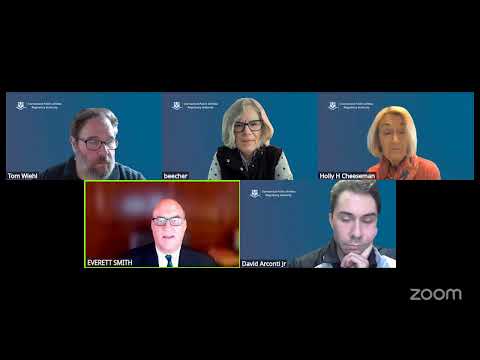
Chair Tom Wheel announced that he had previously filed correspondence in the docket (10/24/2025) recusing himself because of prior participation in the underlying proceeding as an attorney for the Office of Consumer Counsel and said he would abstain from the vote. After remarks and a roll call, the panel adopted the staff-recommended decision.
Commissioner Everett Smith, while supporting the decision, suggested a policy question for the future: “Given the cost pressures our ratepayers currently face, in the future, it may be appropriate to direct these funds to ratepayers as another way to ease our current affordability crisis,” Smith said, urging relevant authorities to consider that option.
Why it matters: the ACPs represent a transfer of funds tied to renewable compliance shortfalls and route money to a mix of entities and programs; timing and deposit instructions affect how quickly funds move into the Green Bank, utility accounts and the Sustainable Materials Management Fund. The authority’s administrative deadlines create near-term compliance requirements for the affected companies.
The panel adopted the decision and recorded the chair’s abstention. The authority recessed to other agenda items; its next regular meeting is scheduled for May 27, 2026.