Get Full Government Meeting Transcripts, Videos, & Alerts Forever!
Get email alerts on the Signs And Sidewalks topic
No spam. Unsubscribe anytime.
Commission votes to recommend disapproval of sandwich‑board substitute over legal and ADA concerns
Summary
The commission voted 3–2 to disapprove a council substitute to ordinance BL2026‑1255 after staff flagged content‑based language and asked that the definition instead track existing on‑premise sign language; the commission based its stance on ADA and legal advice.
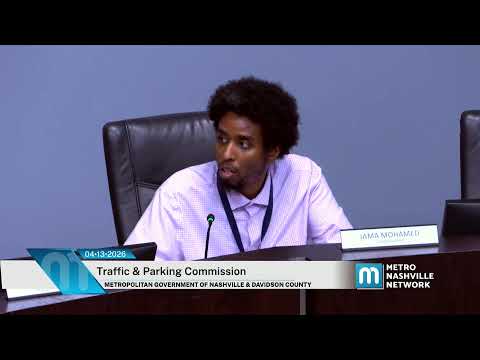
The Metropolitan Traffic & Parking Commission moved to recommend disapproval of a substitute to Metro Council ordinance BL2026‑1255 (sandwich boards) after staff and Metro Legal raised concerns that the substitute privileged commercial speech and omitted language the department had sought to address ADA clearance.
Staff (Hopkins and INDOT counsel Brad Freeze) told commissioners the substitute includes a content‑based definition that would limit permitted sandwich boards to commercial speech, which Metro Legal warned could be problematic under free‑speech principles. INDOT and staff said the ADA clearance requirement (a five‑foot clearance around sidewalk signs) had been addressed in the substitute, but that the definition should mirror on‑premise sign language in the Metro Code to avoid excluding non‑commercial signs.
Commission members debated whether to forward an amended recommendation to council or simply disapprove the substitute; a motion to disapprove passed 3–2. Staff noted that sending an unfavorable recommendation at this stage will change the council voting threshold for final passage (requiring a two‑thirds majority if the sponsor proceeds on third reading). Commissioners asked whether a sponsor might amend the substitute on council floor; staff said that would require suspension of council rules for third‑reading amendment.
The commission’s action was procedural: it recorded objections and stopped short of preparing an exact replacement text. Commissioners asked staff to coordinate with Metro Legal and the sponsor if council seeks amendments before third reading.