Get Full Government Meeting Transcripts, Videos, & Alerts Forever!
Get email alerts on the Land Development Code topic
No spam. Unsubscribe anytime.
Destin council tables controversial marina fee change after hours of debate
Summary
Council members and residents clashed over a proposed rewrite of the land-development code that would replace a one-time construction charge with a small annual per-slip environmental fee for Destin’s harbor. After extensive public comment and council debate, the measure was tabled for further study.
The Destin City Council on May 4 deferred action on a proposed rewrite of its land-development code that would change how the city funds harbor environmental needs, amid sharp disagreement from residents and council members.
The draft ordinance would move existing coastal and conservation provisions into a reorganized “Article 7: Resource Conservation” and replace the current net positive environmental benefit (NPEB) charge — currently assessed as 25% of construction cost on marine projects — with a flat annual charge. Under staff’s proposal the new structure would be $100 a year per non-residential slip and $50 a year per residential slip, with homestead exemptions and a 10‑year proration for recent payments.
“We think this is a fair, administrable framework that will produce predictable revenue and help cover annual harbor operating costs,” Finance Director Crystal Strickland told the council. Strickland said the city’s average revenue under the existing approach has been roughly $25,000–$36,000 a year and that operating expenses (utilities and routine water-quality work) approach $50,000 a year, leaving a funding shortfall.
Todd Burr, vice chair of the Local Planning Agency, summarized a multi‑year review and LPA recommendation, saying the flat fee would reduce administrative burden and encourage small repairs and renovations that the current 25% structure can discourage.
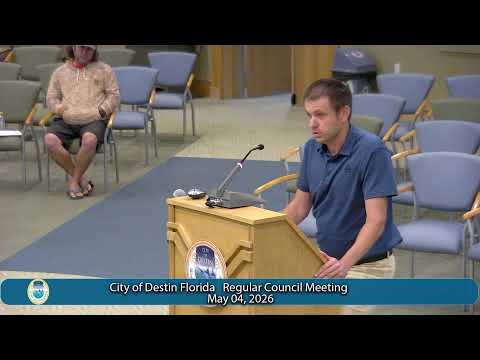
But the proposal prompted vigorous public comment and pushback from council members. Several residents and dock owners argued the flat annual charge would effectively create a recurring tax on slip owners, hitting long‑time residents and small marinas alike. “I own a lot over there. I already pay $10,000 a year in property tax for a boat slip,” a Harbor resident told the council, urging exemptions for local property owners. Another resident said transient tour boats and high-use commercial operators are the primary source of pollution and should shoulder a larger share of any fee.
Council debate focused on fairness, enforceability and scale. Councilman Bagby called for “integrity checks” and questioned whether staff could reliably audit construction values under the current 25% method. Council members also noted homestead exemptions would spare many property owners but leave commercial and non‑residential operators to pay.
After discussion on alternative models — including commercial‑only fees and square‑footage approaches tied to submerged‑land leases — the council voted to table the NPEB portion of the Article 7 rewrite and asked staff, the LPA and stakeholders to return with more options and additional analysis.
The council took no final vote on the substantive fee change; the broader LDC rewrite items were discussed separately. The tabling ensures more outreach and technical review before any ordinance returns to the council for final action.