Get Full Government Meeting Transcripts, Videos, & Alerts Forever!
Get email alerts on the Stormwater Utility topic
No spam. Unsubscribe anytime.
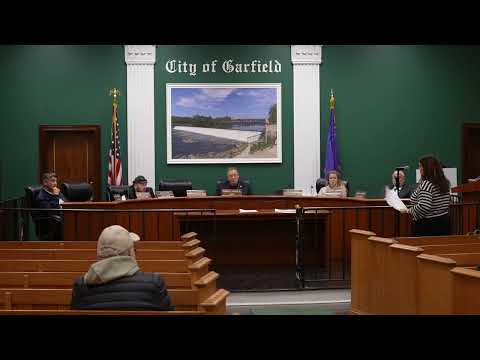
Garfield council hears feasibility study on a potential stormwater utility; consultants outline fee options
Summary
Consultants presented a New Jersey grant-funded feasibility study proposing a stormwater utility for Garfield, describing fee models tied to impervious area, benefits for flood mitigation and long-term maintenance, and next steps including public engagement and a Feb. 11 work session.
City consultants on Tuesday presented a feasibility study that outlines how a dedicated stormwater utility could fund Garfield’s stormwater management, reduce flooding and ensure predictable maintenance.
Elizabeth Mcweeny, a consultant with the study team, told the Garfield Mayor and Council the Clean Storm Water and Flood Reduction Act (2019) authorizes municipalities to form stormwater utilities and that those utilities create a "dedicated funds for storm water improvements specifically," including operations, maintenance and capital projects. She said fees would be “based on a fair and equitable approximation of the proportionate contribution of storm water runoff from a property,” measured by impervious surface.
Why it matters: Council members were presented with a contrast between the city’s current, inconsistent approach — using general funds and tax revenues — and a dedicated utility that would generate predictable revenue tied to each property’s runoff contribution. Consultants said that dedicated funding can support required regulatory compliance, larger capital projects and incentives for private green infrastructure.
Nicole de Monaco, a fellow consultant on the team, described the practical uses of utility revenue: planning, design, construction, operation and long-term asset management for stormwater infrastructure. She said the team quantified impervious surfaces across city parcels and modeled three revenue options tied to different fee-calculation approaches; that detailed breakdown will be provided at a follow-up work session.
Public questions: During the public-comment portion, a resident identified as St Sarapin asked whether the utility would be required by the state. Mcweeny responded that the study is voluntary: "no it's not required by the state and it's not required by Garfield yet — all it is is a study and after their findings the mayor and council will have the decision." Council members reiterated that the consultants’ report is informational and that any adoption of a utility would require ordinances, public outreach and a local decision about fees.
Costs and concerns: Consultants acknowledged the principal political and practical challenges — public acceptance of a new fee and establishing the level of revenue needed to meet regulatory and capital needs. They said tax-exempt properties currently account for a portion of impervious area that does not contribute to general-tax-funded stormwater costs, and that a utility can distribute costs more equitably by charging based on impervious area rather than property tax status.
Next steps: The consultants said they have issued a draft report and will finalize a feasibility study after a February 11 work session and incorporation of public and council feedback. No ordinance or fee was proposed at the meeting; council indicated it will review the consultants’ options before any formal action.
What to watch: The council scheduled a follow-up presentation for Feb. 11 to review fee scenarios and implementation steps, and consultants said municipalities that adopt a utility within two years of a completed feasibility study may receive funding priority under the state assistance program.