Get Full Government Meeting Transcripts, Videos, & Alerts Forever!
Get email alerts on the Hazards Resilience topic
No spam. Unsubscribe anytime.
Committee rewrites hazard statements to acknowledge storm damage and rising flood/landslide risk; adds displacement concerns
Summary
Steering committee revised hazards language to include past storm events and development patterns as drivers of flood and landslide risk and debated a separate problem acknowledging the tension between safety risks and housing needs, including post-disaster displacement and affordability concerns.
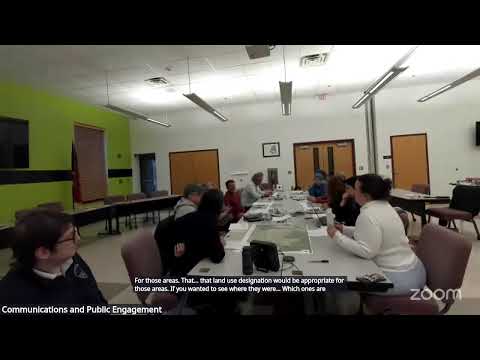
The steering committee voted informally to revise hazard problem statements to reflect both storm-related landscape changes and ongoing development patterns that increase flood and landslide risk. A committee member summarized the proposed framing as: "Swanoa faces increasing risks from flooding, storm water runoff and landslides due to damage from storm events, development patterns, vulnerable infrastructure, and steep terrain." Staff will fold the revised wording into the plan’s hazards and resilience section.
Why it matters: the committee repeatedly returned to a core tension—how to balance the documented, often-increased risk of flood and landslides after Tropical Storm Helen (and other major events) with the community’s need for housing and infrastructure. Members argued that problem language should reflect both historic storm impacts and future risk so that policies and actions can prioritize safety while addressing housing loss and displacement.
Members proposed adding a standalone problem statement acknowledging that the hazard-vulnerability assessment shows "significant risk of flood and landslides which should be acknowledged and balanced with human needs." Some participants said that an explicit problem about balancing risk with housing needs should be elevated so it informs subsequent policy choices on redevelopment, buyouts, and reconstruction.
The committee also agreed to add a problem focused on steep-slope development that endangers lives, property and water quality downhill; staff will refine the phrasing (members debated "steep slope" vs. "down slope" language) and place it among the hazards problem statements.
Participants raised displacement and affordability as cross-cutting issues: members urged the plan to include risk of loss of affordable housing caused by post-disaster redevelopment and gentrification, and suggested anti-displacement tools—such as limits on corporate short-term rentals or tax incentives—be considered among future policy options.
Next steps: staff will incorporate the agreed hazard-wording changes, draft a proposed problem statement that addresses the risk-vs-housing tension for the next meeting, and add a steep-slope problem and a list of anti-displacement options to the policy/action discussion.