Get Full Government Meeting Transcripts, Videos, & Alerts Forever!
Get email alerts on the Noise Ordinance topic
No spam. Unsubscribe anytime.
Resident urges Henry County to adopt residential noise ordinance and boost animal control after years of disruptive barking
Summary
A Henry County resident told commissioners he has three years of logs and video showing extreme dog-barking events — including a measured peak he said reached 102.7 dB — and urged the county to adopt a measurable residential noise ordinance and fund dedicated animal‑control enforcement.
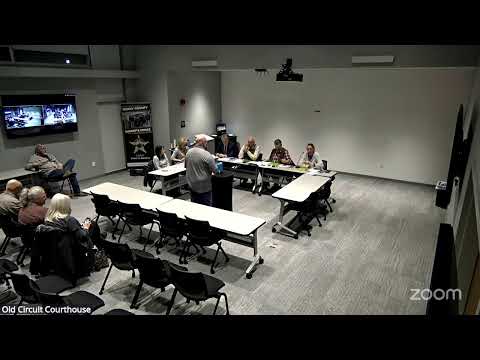
Mr. Herring, a Henry County resident, told the Board of Commissioners during public comment that repeated, loud dog barking at a neighboring property has made his family’s home difficult to use and his sleep scarce. "That dog is 102.7," Herring said, describing a peak reading at his property line and adding that the noise often occurs late at night.
Herring summarized three years of logs and video he said document repeated barking episodes. He said his measurements show background levels around 60 dB on quiet days but that individual barks reach levels he described as damaging to hearing: "That is actually damaging to my hearing," he said, adding that the noise sometimes woke him at night.
Herring told commissioners he had tried multiple county channels — animal control, zoning and the sheriff’s office — without sustained relief. He said he spent thousands of dollars on mitigation measures, including regrading landscaping and installing about $30,000 worth of privacy fencing, and that the family has changed routines to avoid triggering the dogs. "We no longer go outside unless absolutely necessary," he said.
In place of litigation, Herring proposed that the county adopt a residential noise ordinance using measurable decibel limits and a clear process for enforcement and abatement. He suggested using a small local dog-license tax to fund a dedicated animal-control warden or deputized enforcement, saying a $5 per‑dog state-authorized fee could be a revenue source. "If that helps resolve the issues ... I'd happily pay it," he said.
Commissioners and staff discussed enforcement mechanics after Herring's presentation. One commissioner noted the Humane Society and local animal shelter "is not a county agency" and said the county must work with Joel (county staff) and the sheriff’s office to determine why fines were not consistently issued in prior complaints. Commissioners asked staff to follow up with animal-control providers and law enforcement to clarify who is responsible for enforcement and what procedural steps would be required before pursuing abatement or fines.
No formal ordinance or motion was introduced at the meeting; commissioners asked for additional information and said they would consult the county attorney and law enforcement about enforcement options and the county’s contract with the local shelter.
Why it matters: Commissioners were presented with a specific technical claim (repeated, very high-decibel barking at night) and an argument that gaps in enforcement and unclear local definitions make it difficult to apply existing nuisance law. If the board pursues measurable limits or a dedicated enforcement role, that could require a change to county code and funding decisions at budget time.
What’s next: Commissioners asked staff to coordinate with legal counsel and the sheriff’s office to review enforcement pathways, fines, and the county’s contract with the local shelter. No ordinance vote was scheduled at this meeting.