Get Full Government Meeting Transcripts, Videos, & Alerts Forever!
Get email alerts on the International Conflict topic
No spam. Unsubscribe anytime.
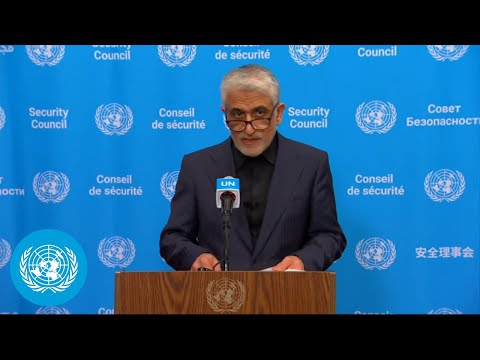
Iranian representative tells U.N. Security Council the U.S. and Israel launched a "war of aggression"
Summary
An Iranian representative told the U.N. Security Council that U.S. and Israeli forces began a "deliberate, unprovoked, and unlawful war of aggression" against Iran, alleging more than 1,300 civilian deaths, widespread infrastructure damage and environmental harms, and urged Council action.
An Iranian representative addressing the U.N. Security Council accused the United States and Israel of launching "a deliberate, unprovoked, and unlawful war of aggression" against Iran that began Feb. 28 and had continued for 11 days.
The representative said the attacks were "deliberately and indiscriminately targeting civilians and civilian infrastructure," and alleged the assaults had caused "the martyrdom of more than 1,300 civilians" and destroyed 9,669 civilian sites. He provided a breakdown, saying the damage included 7,943 residential homes, 1,617 commercial and service centers, 32 medical and pharmaceutical facilities, 65 schools and 13 Red Cross buildings.
He said strikes on fuel storage facilities on the night of March 7 released hazardous pollutants that caused severe air pollution, and that rainfall on March 8 spread "highly acidic precipitation," increasing respiratory and environmental risks. "Medical centers in Tehran have been placed on high alert," he said, and residents had been advised to remain indoors.
The representative also said Mehrabad Airport in Tehran was heavily attacked and that several civilian aircraft and airport facilities were destroyed or severely damaged. He said a freshwater desalination plant on Qeshm Island in Hormozgan Province was "deliberately targeted," disrupting water supplies to 30 villages and putting thousands at risk.
Describing an attack in Beirut, the speaker said an incident at the Ramada Hotel "assassinated four diplomats of the Islamic Republic of Iran," who had temporarily relocated there with the knowledge and coordination of the Lebanese foreign minister. He called the targeting of diplomats on another state's territory "a grave terrorist attack, a war crime, and a flagrant violation of international law."
The representative cited multiple international instruments when arguing the attacks violated legal obligations, naming the U.N. Charter, the Vienna Convention on Diplomatic Relations and environmental agreements including the United Nations Framework Convention on Climate Change and the Convention on Biological Diversity.
He criticized the Security Council for what he called its silence and said some members were seeking a "biased and politically motivated resolution" that would "reward the aggressor and punish the victims." He warned that adopting such a resolution would "severely damage and undermine the credibility and legitimacy of the Council." "If adopted, the aggressor, Israel and the United States, will be rewarded and emboldened to carry out further acts of aggression," he said.
The representative demanded accountability: "All perpetrators must be held fully accountable," and urged all U.N. member states to condemn the attacks and take urgent action. He concluded the statement by inviting questions from the Council.
No responses from other Council members appear in this transcript excerpt; the representative's allegations and figures were presented to the Council without recorded rebuttal here.