Get Full Government Meeting Transcripts, Videos, & Alerts Forever!
Get email alerts on the Traffic Calming topic
No spam. Unsubscribe anytime.
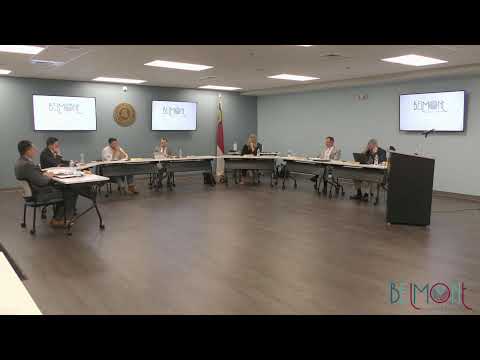
Belmont council moves to revise traffic‑calming policy after Oak and Julia Avenue concerns
Summary
After residents raised speeding concerns on Julie and Oak avenues, council discussed weaknesses in the city’s traffic‑calming process and asked staff to revise the policy (notably the sequencing of the 75% petition and speed‑study steps) and return with amended language; Oak Street will be re‑evaluated under the revised rules.
Residents told council that repaving and cut‑through traffic have increased speeds on neighborhood streets. Council reviewed the city's traffic‑calming procedure, which staff described as a multi‑step process (citizen request → public works review → police speed study → 75% petition of property owners → design and approval). Alex and other council members said problem streets repeatedly fall short of the policy's speed‑study thresholds and proposed moving the 75% petition step earlier or adding a clause allowing staff to advance certain problem streets "unless otherwise directed by city council."
Chief Falls explained the police department’s approach to speed studies and enforcement and defended the recording devices: "the device itself is very efficient ... speed equals distance ... that's how it does it," and he acknowledged that visible enforcement (marked police cars) changes driver behavior. Council discussed the tradeoffs between rigorous technical thresholds and community perceptions that the studies fail to capture chronic safety problems.
Council asked staff to prepare amended policy language to: move the petition requirement earlier in the process or allow conditional council direction to proceed despite study results; clarify petition mechanics; and identify what class of streets should be eligible for expedited review. The council indicated it will consider the revised policy at a future meeting and re-run Oak Street through the amended process.
Next steps: staff will draft revised policy language and bring it back for adoption; Oak Street will be re-evaluated under the revised policy if council adopts the changes.