Get Full Government Meeting Transcripts, Videos, & Alerts Forever!
Get email alerts on the Infrastructure Finance topic
No spam. Unsubscribe anytime.
STA authorizes framework to advance up to $95 million for I Street Bridge interim financing
Summary
The Sacramento Transportation Authority authorized staff to execute a master agreement with the City of Sacramento to advance Measure A funds (not to exceed $95 million) and to solicit bank proposals for a revolving line of credit to cover a construction‑period funding gap for the I Street Bridge replacement project.
The Sacramento Transportation Authority on Feb. 20 approved a policy framework to address a construction‑period funding gap for the I Street Bridge replacement project, authorizing the executive director to enter a master agreement with the City of Sacramento to advance Measure A funds up to $95 million and to solicit proposals from commercial banks for a revolving line of credit.
STA staff told the board the I Street Bridge replacement is a regionally significant infrastructure project with an estimated construction cost of about $300 million and that most funding comes from state and federal reimbursement grants. Because those grant funds are reimbursed after costs are incurred, the City of Sacramento faces a timing shortfall during construction. Coordination with Caltrans and updated assumptions reduced the maximum proposed line of credit need from an earlier $165 million estimate to $95 million, staff said.
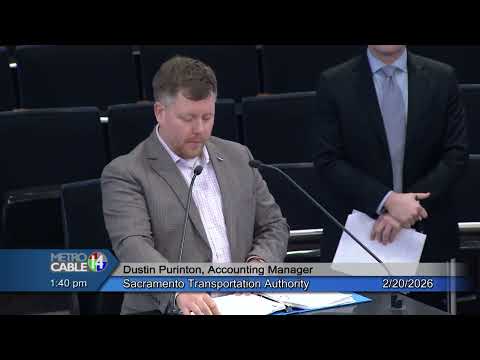
Darren Hodge (PFM), the board’s financial adviser during the presentation, explained that STA overlaid the project construction schedule with anticipated reimbursement timing to estimate annual draw needs. Under the model presented, draws peak in fiscal 2029, with a projected payback timeline that anticipates the line being paid off around fiscal 2032. Hodge summarized two interest scenarios: using interest rates as of Feb. 10 the advisers estimated an illustrative interest rate near 3.42% and a corresponding total interest/fee estimate shown in staff materials; a five‑year historical average scenario produced a different estimate. Staff emphasized that final interest costs will depend on market rates at the time draws occur.
STA staff said the line of credit would be secured by Measure A sales tax revenues for credit‑strength purposes, while repayment responsibility would be isolated to the City of Sacramento’s Measure A share. Board members pressed staff on the degree of legal commitment behind repayment language, noting earlier briefings used terms such as “should” rather than “shall.” "That is a worst‑case scenario, but yes," staff said, describing how the security structure and repayment isolation are intended to protect other Measure A jurisdictions while providing the City of Sacramento a path to meet obligations if grant reimbursements are delayed.
Several board members stressed the practical need to proceed to protect a narrow in‑water construction window next construction season. "If we don't get our contracts awarded and into the river by May, then we lose our window of opportunity to actually construct," Director Gara said, urging approval so the city can move forward with contract awards.
Directors also acknowledged project risk. "Risk‑free is a somewhat nebulous term," Director Hume said in debate, noting the framework reduces exposure for other jurisdictions but does not eliminate all risk for STA or the city.
The board unanimously approved the staff recommendation on a roll call vote, directing staff to solicit bank proposals, finalize an implementation agreement with the City of Sacramento consistent with the approved framework, and return to the board for final approval of financing documents when needed.
Next steps: staff will solicit commercial bank proposals, coordinate on reimbursement and draw procedures with the City of Sacramento, prepare an implementation agreement, and bring final financing documents back to the board for approval before funds are drawn. The board was told the debt is not required immediately; STA may not need the line of credit for several months to a year depending on award timing and contractor schedules.