Get Full Government Meeting Transcripts, Videos, & Alerts Forever!
Get email alerts on the Foreign Policy Local topic
No spam. Unsubscribe anytime.
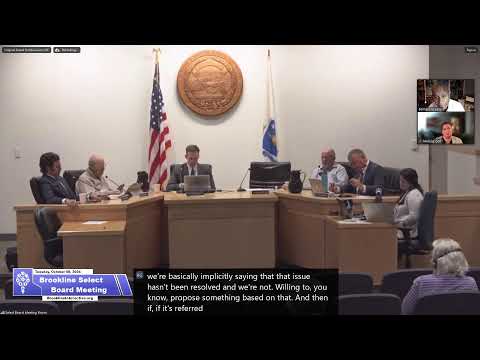
Heated, polarized debate as petitioners seek Select Board recommendation for ceasefire resolution; board leaves decision to town meeting
Summary
A petition calling on Brookline to support a permanent ceasefire between Israel and Hamas drew a large, emotional public hearing. Supporters framed it as a humanitarian imperative; opponents said foreign policy is outside town business and warned of community fallout. The Select Board recorded testimony and signaled it will not preempt town‑meeting deliberations.
A citizen petition asking the Town of Brookline to endorse a permanent ceasefire in the Israel–Hamas conflict and urge the return of hostages drew a large and highly polarized public hearing on Oct. 8.
Lead petitioner Omar Muk framed the resolution as a moral appeal and urged an end to civilian suffering in Gaza. Co‑petitioners and several public speakers described grave civilian casualties and called on Brookline to publicly support ceasefire negotiations and bring hostages home. Supporters argued local civic bodies should register humanitarian positions and press the federal government to broker a ceasefire.
Opponents — including town residents, faith and communal leaders and advocates for Israel — responded that the matter is a foreign‑policy issue outside the practical scope of town governance, that the petition is one‑sided, and that passage could harm Jewish residents and stoke local tensions. Several speakers urged the Select Board to recommend “no action” or to table the item. Others argued the proposed wording (specifically the word “ceasefire”) is politically fraught and could be read as siding with one party.
Select Board members voiced mixed views. Some said they opposed preempting public debate and would not vote to suppress discussion at Town Meeting; others said a municipal resolution risks inflaming local divisions and might be an inappropriate vehicle for foreign‑policy advocacy. The moderator, Town Counsel and board discussed procedural questions about tabling and whether the town moderator must designate a future time for resumed discussion if a motion to table is adopted.
No Select Board vote recommending a position was taken Oct. 8; board members indicated they will allow Town Meeting to debate the article. The hearing underscored strong, emotional views across the community and the Select Board’s reluctance to decide a contentious foreign‑policy resolution on its own.