Get Full Government Meeting Transcripts, Videos, & Alerts Forever!
Get email alerts on the Salary Schedule topic
No spam. Unsubscribe anytime.
Caldwell negotiators select "Draft Two" salary plan and authorize one-time stipends for staff frozen by state career-ladder
Summary
Caldwell negotiators narrowed three salary options to "Draft Two," which honors additional education and establishes clearer, larger step increases; members also approved forming a small committee to draft a Memorandum of Understanding for one-time $1,000 stipends to staff who would otherwise be "frozen" by new state placement rules.
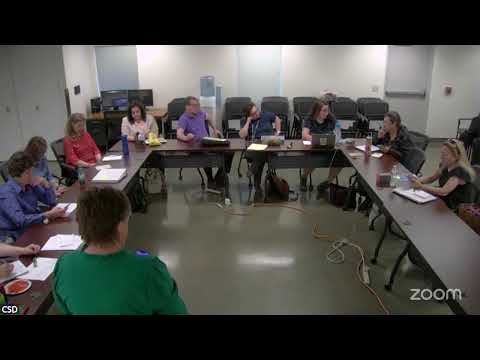
Negotiators in a Caldwell School District collective bargaining session voted to adopt "Draft Two" as the district—areer-ladder salary schedule framework and authorized a small committee to draft a one-time Memorandum of Understanding (MOU) that would provide $1,000 stipends to staff negatively affected ("frozen") by the state's new placement minimums.
The group, facilitated by Stephanie Meyers, said Draft Two best balances honoring teachers' additional education (credit for BA24 and master'4 where applicable), clearer steps between residency/professional/advanced professional placements, and district budget sustainability. "We want something that honors education and is sustainable," a negotiator said during deliberations.
Why it matters: Idaho's recent changes to the statutory career ladder (cited in the meeting as Idaho code and tied to Senate Bill 1095 and JFAC budget action) set mandated minimums for R1, P1 and AP1 placements; districts now must place state-prescribed minimum salaries on specific cells of local schedules. Negotiators warned the policy amounts to an "unfunded mandate" because the state did not increase overall funding to match the new placement requirements.
What was decided: By consensus, negotiators removed Draft One (which offered no explicit education credit and carried higher district cost) and Draft Three (a more complex grid judged confusing to read and sustain) and moved Draft Two forward. The group also approved forming a small subcommittee to craft MOU language for a one-time $1,000 stipend (plus employer payroll costs) to help roughly the 33'5 employees identified as "frozen" until their state placement catches up.
Key details and next steps: Draft Two emphasizes portability and consistent percent steps between rungs so HR and prospective hires can more easily determine placement. Negotiators noted there are some staff whose current contracted pay exceeds their placement under the new schedule; state statute prevents paying less than the previous year's amount, so the MOU will describe a one-time payment (not a permanent salary increase) to mitigate the transition. The committee will draft MOU language, and negotiators said the MOU and final contract language will be shared with membership and the board before ratification.
Claims and context: Negotiators repeatedly described the state changes as a requirement "thrust upon us by the state" and cautioned listeners not to equate the shift with additional state funding. "We are not getting more money," a facilitator said. At the same time, several participants argued the career-ladder approach will, over time, benefit recruitment and retention by standardizing placements.
The process ahead: A small negotiating subcommittee will work on the MOU and clarifying contract language (including how to label and record frozen placements on contracts) and return draft language to the larger team for review. Negotiators scheduled follow-up work sessions next week to finalize contract text, special-education clarifications and extra-duty language before the package is taken to ratification and the district board.