Get Full Government Meeting Transcripts, Videos, & Alerts Forever!
Get email alerts on the Bartram Legacy topic
No spam. Unsubscribe anytime.
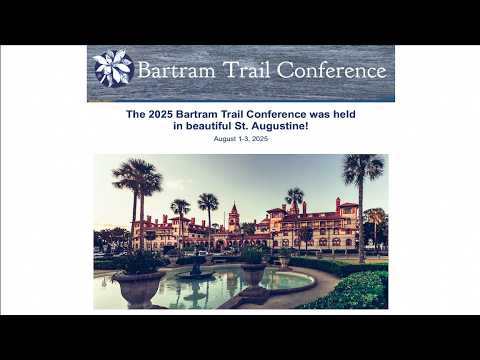
Scholars at Bartram Trail Conference Revisit William Bartram’s Florida journeys and Indigenous encounters
Summary
Historians and Indigenous scholars at the Bartram Trail Conference in St. Augustine framed William Bartram’s travels (1760s–1770s) as a complex source for native diplomacy, colonial land claims and plantation ventures, arguing Bartram’s writings open windows into indigenous survivance while also reflecting colonial perspectives.
Dr. Matthew Jennings opened the Bartram Trail Conference with a broad overview of William Bartram’s mid‑18th century travels in East Florida, noting the writer’s botanical observations, encounters with colonial officials and documentation of native earthworks.
The conference’s historical strand then probed that colonial world more sharply. Taylor McGoy traced Governor James Grant’s efforts (arriving 1764) to make East Florida attractive to investors and to establish plantation economies—often centered on indigo and driven by enslaved labor. McGoy said Grant “pinned a memorial before his arrival outlining his belief that products such as indigo, cotton, silk, wine…could all be produced in East Florida,” highlighting the political push to reconfigure the region’s economy.
Indigenous historians reframed the story. Dr. Denise Bossy urged attendees to treat Bartram as a source that, properly read, reveals continuities of indigenous presence. “This land that we’re in right now is the unseated territory of Tamukqua speakers,” Bossy told the room, and she summarized decades of mobility, town‑based polities and resistance that scholars long mischaracterized as disappearance.
Dr. James Hill followed with a detailed look at Elatchua leaders such as Cowkeeper (Aaya) and Long Warrior. Hill described tactical choices—Cowkeeper’s pattern of avoiding large councils to secure one‑on‑one negotiations with governors, and the ways some Indigenous groups adopted cattle husbandry—showing how local leaders shaped their own political and economic paths amid colonial pressure.
Panelists converged on two themes: first, Bartram’s accounts are valuable but partial—the written and visual records reveal both new information and colonial framings; second, indigenous communities show long‑term survivance and political agency that archive‑centered narratives have obscured. Speakers and audience members emphasized archival gaps and the importance of oral histories and archaeological work to complete the picture.
Conference organizers said the sessions were intended to expand how historians, archaeologists and Indigenous communities collaborate on county‑level site preservation and interpretive projects. Several presenters recommended prioritized archival work (including microfilm holdings at the Library of Congress) and more fieldwork to connect Bartram’s descriptions to physical sites.
The conference’s historical panels closed with a reminder from multiple presenters that Bartram’s writing can both illuminate and mislead: his close listening to informants matters, but so does contextualizing his accounts within colonial patronage and 18th‑century scientific practices. The panel on Cowkeeper and Long Warrior ended with a call to support community‑led projects that document and preserve living Indigenous histories in Florida.