Get Full Government Meeting Transcripts, Videos, & Alerts Forever!
Get email alerts on the Education Funding topic
No spam. Unsubscribe anytime.
Teachers and parents warn proposed cuts would gut services; school committee urges state advocacy
Summary
During public comment at the Glocester council meeting, teachers, parents and a school committee member described cuts that would eliminate interventionists, special‑education positions, teaching assistants and enrichment staff and urged collaboration and testimony on pending state bills to address transportation and aid.
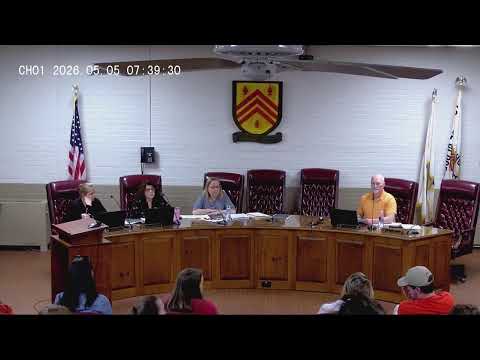
Teachers, parents and a school committee member told the Glocester Town Council on May 4 that the proposed FY2026–27 budget threatens core school services and urged coordinated action with state legislators.
Aaron McY, who identified himself as an art teacher with 40 years in town, testified that interventionist positions have been eliminated (four positions in 2023, none in 2026), that reading and math interventions were reduced, and that special‑education caseloads have risen from 23 students in 2024 to 36 in 2026 (with an additional seven in pre‑K). He said those shifts mean classroom teachers must absorb diverse, high‑need populations without specialized support and that cuts to part‑time art, music and health teachers would eliminate enrichment blocks. "This cut is not sustainable," Aaron said, warning the changes will harm both struggling and high‑ability students.
Resident Jason Wford told the council the school department is already operating in deficit and that a 1% increase in the town budget will not cover rising costs such as a cited 48.65% rise in electricity line items. He said, "A 1% increase of $84,793 is not even going to cover...electricity," and urged creative solutions to help the school balance its books.
Amy Ferrer, speaking as a member of the Glocester School Committee, described a working group convened to identify problems and barriers, called for improved communication with the council and emphasized transportation and state aid as practical, time‑sensitive priorities. Ferrer cited three state bills (transcribed references include H7420 and H7421 and an Education Equity and Property Tax Relief Act) scheduled for early May hearings and encouraged residents to submit written testimony; she offered to help coordinate testimony and relay guidance about the submission process.
Council members acknowledged the concerns, reiterated that the council does not directly control school allocations (the school committee handles the department’s budget), and said they would forward written suggestions to the school committee. One council member noted contested regional funds (about $154,000) that, if recovered, could provide relief to local schools.
What happens next: residents and school officials were urged to submit written testimony to state legislators and to attend or submit testimony for the May hearings on the cited bills. The referendum on the municipal budget is scheduled for May 19, 2026; speakers urged turnout and further collaboration between council and school committee to pursue short‑term and structural solutions.