Get Full Government Meeting Transcripts, Videos, & Alerts Forever!
Get email alerts on the School Budget topic
No spam. Unsubscribe anytime.
Gettysburg Area SD faces roughly $1.9 million shortfall; board weighs modest tax increase and staffing changes
Summary
At a March work/study session the Gettysburg Area School District’s administration outlined a preliminary 2026–27 budget showing revenues of about $80.5 million and a remaining shortfall near $1.9 million at a 0% tax increase; the board discussed options including a 1%–4.2% tax-rate range, converting contracted 'family navigators' to two social‑worker positions and targeted expenditure reductions.
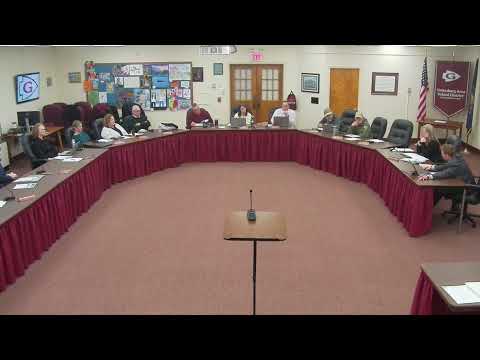
The Gettysburg Area School District heard a detailed preliminary budget presentation and follow‑up questioning at its March work/study meeting, where administrators said the district remains short roughly $1.9 million if the tax rate is held flat.
Belinda, the district budget lead, told the board the district’s revenue picture for 2026–27 shows local revenue at $54.8 million, state revenue at $24.6 million and federal revenue of about $1.1 million — total proposed revenue of roughly $80.5 million. On the expenditure side she said salaries and benefits account for the largest share (~$48.9 million), purchases of services about $20 million and supplies and equipment about $4.3 million. After identifying about $886,000 of additional revenue and $3.1 million of reductions, the administration said the remaining gap at a 0% tax increase is about $1.9 million.
"Revenue equals expenditures," Belinda said, summarizing the administration’s approach. She recommended several approaches the board could consider, including reducing the planned $1.0 million capital‑reserve transfer, identifying further attrition and vacancy savings, or adopting a modest tax increase. Her staff outlined scenarios: a 1% increase (the board has used 1% historically to support ACTI) would narrow the gap by roughly $360,000; landing between about 2.5% and 3.5% would close a larger portion of the shortfall; the maximum index (4.2%) would nearly close the budget gap, she said.
Members repeatedly pressed for more line‑item detail. Board member Dave asked for a walk‑through of the audit balance sheet and additional backup and recommended an administrative session open to the public before the next meeting to review page 18 of the audit and the financial schedules. The board agreed to advertise a 6 p.m. session on March 16 to review the balance sheet and supporting documents.
Public commenters framed the fiscal choices as matters of fairness and restraint. Pat Furlow urged the board to "operate within the revenues you collect" and be prepared to make hard decisions such as not replacing positions or delaying projects. Resident Richard Schultz said his own school portion of taxes can amount to about $500 a month and asked whether desirable facility items — for example an observation deck — were truly necessary.
The administration also described programmatic and staffing adjustments: converting contracted "family navigators" into two district social‑worker positions (employees rather than independent contractors) to maintain services for students experiencing homelessness and other needs, and absorbing some intermediate‑unit (IU) services locally. Administration said four unplanned special‑education positions were added this year because of IU service changes and that three more are anticipated next year. While bringing services in‑house could yield savings (administrators estimated a possible $300,000–$500,000 range), they cautioned the net effect depends on staffing and long‑term IU pricing.
"We need to start somewhere," Belinda told the board, acknowledging community concerns about service reductions but urging pragmatic steps to close the gap.
What’s next: the board asked administration to provide more detailed backup ahead of the March 16 session, including the balance‑sheet explanation and revenue forecasts from the county; the board will continue budget work before any final vote on tax rates or other changes. Earlier routine business and two budget‑adjacent votes (approval of the York Adams Academy operating budget and the illustrative K–5 math curriculum resource) were approved unanimously at the meeting.