Get Full Government Meeting Transcripts, Videos, & Alerts Forever!
Get email alerts on the Ordinances Ch26 32 topic
No spam. Unsubscribe anytime.
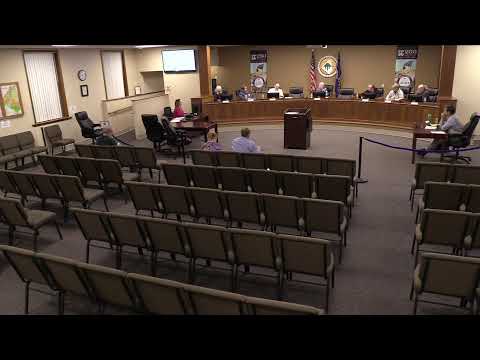
Oconee Planning Commission forwards revised Chapters 26 and 32 to County Council after extensive edits
Summary
After hours of line-item review, the Oconee County Planning Commission voted to forward revised Chapters 26 (road/private-drive standards) and 32 (land development standards) of the county Code of Ordinances to County Council, adopting clarifying language on private-road certification, grandfathering, and right-of-way widths.
The Oconee County Planning Commission voted March 2 to forward revised Chapters 26 and 32 of the county Code of Ordinances to County Council, following multiple amendments that clarified private-road certification, grandfathering language and collector right-of-way widths.
The commission began discussion of Chapter 26 by agreeing to a review approach focused on package-level issues rather than a line-by-line edit. Vicki (staff) outlined the process and commissioners made a motion to send the chapter to council after suggested revisions. Debate centered on a provision requiring private roads to be "legally certified for compliance by surveyor/engineer licensed by the State of South Carolina." Commissioners and staff worried that the language could impose an undue cost on small landowners who add a single lot, while still wanting consumer protection and a clear record for gated subdivisions. After hearing from Mr. Reed and other staff about current practice — engineers typically sign off on stormwater and structural items, surveyors record plats — the commission amended C7 to require certification "for compliance to county standards by surveyor/engineer licensed" in the state, a change Mr. Rude said improved clarity.
The commission also addressed a ‘‘pulled from 32’’ paragraph that had been moved into Chapter 26 earlier in the revision process. Members agreed the paragraph was redundant and either unnecessary or better placed under general provisions; they voted to mirror a grandfathering clause for existing private drives into the private-road subsection (so roads in use at time of adoption would be exempted from new standards) rather than simply deleting it.
Technical testing language for privately built roads was another point of contention. A highlighted sentence calling for verification by "non-destructive testing" (NDT) to prove an existing road met compaction and asphalt-depth standards drew practical objections from engineers and commissioners, who said NDT cannot reliably detect buried debris or confirm base compaction; the commission removed the NDT phrasing and discussed core sampling and other realistic verification approaches.
On Chapter 32, the commission accepted several staff-proposed clarifications (noted in the clean copy as 'green' edits) — including parallel certificate options consistent with Chapter 26 — and removed some vague ‘‘yellow’’ items that commissioners agreed belonged in Chapter 38 (development standards) or were otherwise duplicative. A discrepancy in collector-road right-of-way width was fixed: a reference to 50 feet was corrected to 66 feet to match other ordinance text.
Multiple motions to amend and approve the two chapters were approved by voice vote. Commissioners indicated staff will prepare the revised clean copies and that Mr. Haney is expected to present the package to County Council.
Next steps: the commission formally forwarded Chapters 26 and 32 as revised to County Council for consideration. Any further technical clarifications, particularly for stormwater standards and development standards (Chapter 38 topics), may be revisited in future commission work sessions.