Get Full Government Meeting Transcripts, Videos, & Alerts Forever!
Get email alerts on the Education Policy topic
No spam. Unsubscribe anytime.
Warren County board reviews spring policy updates as state lowers graduation-credit requirements to 22
Summary
At its Sept. 24 work session the Warren County Board of Education reviewed spring policy updates from the North Carolina School Boards Association, discussed the State Board’s move to a 22-credit graduation baseline, considered dress-code regulations, and asked legal staff to redraft contract-threshold language for committee review.
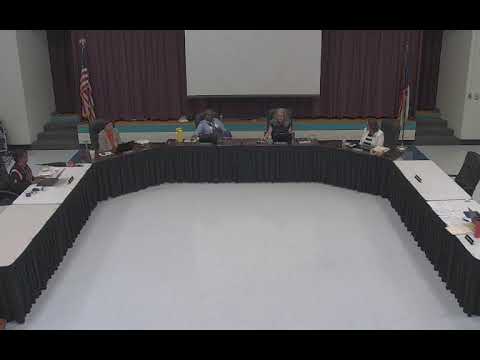
The Warren County Board of Education met Sept. 24 to review spring policy updates and discuss district-level implications of recent state guidance on high-school graduation and several local policies.
Board Chair Layman opened the meeting, announced a quorum and noted one absent member before turning to a color-coded packet of proposed updates provided to board members and the public online. Staff said the packet groups policies as required, strongly recommended and optional under guidance from the North Carolina School Boards Association (NCSBA).
The meeting focused first on policy 3460 (graduation requirements). Dr. Monu Davis told the board the State Board of Education is now treating 22 credits as the baseline that districts may not require students to exceed. Attorney O’Keefe read the relevant statutory guidance aloud, saying, “beginning with the 2024–25 academic year the State Board of Education no longer provides clear and specific authority to local boards to exceed the LE requirements for graduation,” and advised the board legal counsel would confirm whether current seniors must be grandfathered or whether the change takes immediate effect. Board members asked administration to obtain written legal clarification about effective dates and to prepare recommended communications for families and counselors.
Board members also opened a substantive discussion of student dress code (policy 4316) and related staff regulations (policy/regulation 7340). Staff reported the board’s policy language was last updated in 2022 and some staff regulations date to 2008. Members debated whether to draft districtwide regulations (R&P) that would set consistent expectations across schools while leaving narrower discretion to principals for school-level enforcement. Several trustees recommended forming a committee—including parents, students, principals and staff—to draft proposed regulation language and sample school-level rules for the board to review.
On procurement-related policy 6420, trustees discussed a provision that currently limits the same vendor to $30,000 in any consecutive 12‑month period. Finance staff and trustees said that “consecutive 12‑month” window can be hard to track and proposed replacing it with a school fiscal-year threshold (July 1–June 30). The board asked attorney O’Keefe to produce a redline showing the suggested change and agreed to add more contract summaries to committee agendas to increase transparency before any board vote.
Other policy topics included planned legal review of optional policies (e.g., technology/AI training in policy 3220 and extracurriculars in 3620), efforts to obtain an unavailable child-safety training video for grades 6–12, and questions about policy 2130 (board member compensation and reimbursements). On compensation, staff noted current mileage and meal rates are linked to the North Carolina budget manual; trustees asked staff to produce a clear, printable reference so elected members can see current reimbursement values and how air travel is reconciled with mileage reimbursements.
The board also directed staff to bring homework policy (3135) and student-wellness policy (6140) items to curriculum and wellness committees for deeper review. A principal and a parent speaker described local homework practices (four days of homework with Friday off) and urged alignment between assignments and classroom instruction. Trustees asked staff to gather master schedules and data on weekly physical-activity minutes and report back to the curriculum committee.
No votes on policy adoptions were taken at the Sept. 24 work session; several items were slated for further legal review or committee consideration before possible action at a future public meeting.
The board then convened in closed session under state statutory exceptions and later adjourned.