Get Full Government Meeting Transcripts, Videos, & Alerts Forever!
Get email alerts on the Government Ethics And Procedure topic
No spam. Unsubscribe anytime.
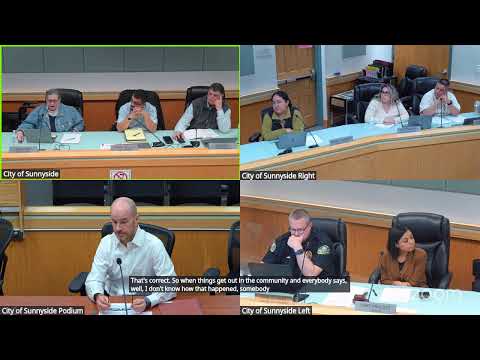
City attorney Quinn Plant briefs Sunnyside council on powers, ethics, records and land-use practice
Summary
Quinn Plant, an attorney with Menke Jackson Beyer, gave Sunnyside council an extended overview of city council authority in a code city, personnel and contract issues, ethics and recusal rules, public-records and social-media pitfalls, hearing-examiner procedures for land-use decisions, and executive-session boundaries.
Quinn Plant, the council’s presenting attorney, spent the bulk of the meeting briefing councilors on the scope and limits of council authority as a Washington code city, and offered practical guidance on personnel contracts, contracting authority, ethics and recusal, public-records obligations and meeting management.
Plant told the council that as a code city it has broad powers: "you guys as city council have the maximum power and you can do anything that is not expressly prohibited by the state constitution," and cautioned that many municipal decisions are executed by contract and require clear council approval. He recommended caution around employment contracts, noting that personnel policies, collective bargaining and written contracts interact and can create legal and financial risks.
On ethics and conflicts of interest, Plant described state statutory limits and exemptions, noting past cases where the court found problematic votes when officials had a beneficial interest in city contracts. He advised disclosure and careful consideration of recusal where a financial interest exists, and explained that abstention rules can be set by council procedure.
Plant highlighted public-records and open-meeting risks: odd or spam email addresses can cause records to be missed, potentially triggering litigation, and text messages about city business may become subject to public-records requests. "Check your spam folder, at least every five business days," he advised staff and council. He also discussed First Amendment litigation related to social-media pages and recommended clear disclaimers where council members maintain personal pages.
On land use, Plant explained the role of hearing examiners and the narrow factors councils should use when reviewing recommendations or considering rezonings or subdivisions, and he cautioned that denials must be supported by findings and conclusions to withstand appeals.
Council members asked questions about recusal, whether a recused councilor must leave executive session (Plant said no statutory requirement to leave but that a council could adopt such a rule), and who may attend executive sessions without waiving attorney-client privilege. Plant stressed that inviting third parties into an executive session risks waiving privilege and advised caution.
The presentation closed after an extended Q&A. Councilors praised the briefing and asked for copies of the slides and a cheat sheet of Robert's Rules tips that Plant said he would provide.