Get Full Government Meeting Transcripts, Videos, & Alerts Forever!
Get email alerts on the Triage Ai topic
No spam. Unsubscribe anytime.
DARPA’s Triage Challenge tests AI to speed and prioritize medical care in mass-casualty events
Summary
DARPA’s Triage Challenge pairs machine-learning models with semiautonomous systems to identify casualties, estimate vital signs in noisy environments, and prioritize victims for rescue; organizers stress rigorous testing and keeping human clinicians in the loop.
The Defense Advanced Research Projects Agency (DARPA) is running a Triage Challenge that pairs machine-learning models with semiautonomous systems to identify casualties, estimate vital signs in chaotic settings, and prioritize victims for rescue, according to the presentation in the transcript.
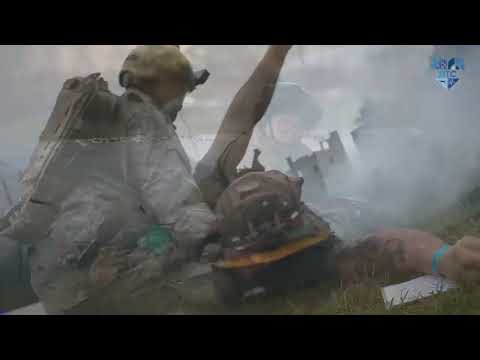
DARPA framed the effort as a response to the limits of human decision-making in mass-casualty incidents. “Mass casualty events can overwhelm human decision-making,” the presenter said, and the program aims to add "speed, consistency, and life-saving precision" to emergency medical triage.
The challenge has two complementary tracks. In the systems challenge, organizers said, algorithms guide semiautonomous machines to navigate disorderly disaster scenes, detect casualties and estimate heart and respiration rates to prioritize patients for rescue. In the data challenge, teams must train algorithms on large, real-world, often noisy data sets so models can identify features in vitals data that indicate a need for medical intervention.
Presenters cautioned that many off-the-shelf models have been trained in controlled environments and do not yet perform reliably in the field. “A lot of the models that are available right now ... are all models that have been done in a clean environment,” the presenter said, noting that it is “a lot to teach a robot to reason” when vitals are difficult to capture without physically touching people in a chaotic scene.
Organizers stressed the importance of preparing AI for varied contexts and of human oversight. The transcript says teams are working with trauma surgeons to evaluate whether these algorithms could be installed in trauma bays as well as deployed in the field, and that the program emphasizes rigorous testing with humans kept "in the loop." The presenter described validation methods that compare robot assessments to ground-truth measurements gathered from human actors wearing standard off-the-shelf wearable devices that record heart rate and respiratory rate.
Speakers also acknowledged specific, practical limitations. The presenter noted that many clinical assessments rely on hands-on checks—"a real medic will take a person, roll them over and do a blood sweep"—which current robotic systems do not perform. That gap is part of the reason organizers pair data and systems tests and emphasize collaboration with clinicians.
The presentation concluded by underscoring the potential of the program: the presenters said lessons learned in the DARPA Triage Challenge could change how responders save lives in mass-casualty incidents by improving the speed and consistency of triage decisions.
The transcript does not specify testing locations, participating teams’ institutional affiliations, specific budgets, or timelines for deployment. No formal votes or policy decisions were recorded in the material provided.