Get Full Government Meeting Transcripts, Videos, & Alerts Forever!
Get email alerts on the Sanctions And Diplomacy topic
No spam. Unsubscribe anytime.
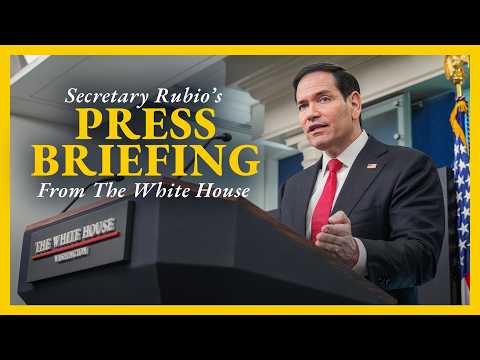
Rubio defends sanctions push, previews U.N. resolution and calls War Powers Act "unconstitutional"
Summary
In a wide-ranging Q&A Secretary Rubio said the U.S. is intensifying sanctions tied to maritime operations, will seek a U.N. resolution condemning attacks on commercial shipping, and described the War Powers Act as unconstitutional while saying the administration still informs Congress.
At a White House briefing Secretary Rubio outlined how the United States is pairing maritime protection with stepped-up sanctions and diplomatic pressure, and answered reporters on a range of related foreign-policy questions.
On sanctions and diplomacy, Rubio said Treasury is identifying and cutting off revenue streams that enable Iran’s actions and that the administration will press for a U.N. resolution to condemn the use of mines and attacks on commercial vessels. "All we’re asking them to do is to condemn it, to call on Iran to stop blowing ships, to remove these mines, and to allow humanitarian relief to come through," he said, while acknowledging a prior resolution was vetoed and that passage is not guaranteed.
Reporters pressed Rubio about other international issues. Asked about a $25 million reward listed on the State Department website for Diosdado Cabello — described in a question as "the secretary of interior" on the web posting — Rubio said he had no update and that the policy "hasn’t changed." On Cuba he said humanitarian aid has been distributed through the Catholic Church but that Cuban authorities have blocked distribution.
On Lebanon, Rubio faulted Hizballah for inflaming Israeli-Lebanese violence and called the group an agent of Iran; he said U.S. mediation aims to build Lebanese capacity to disarm Hizballah and achieve a permanent ceasefire with Israel.
Law and congressional oversight: Rubio described the War Powers Act as unconstitutional and said that "every single president that has occupied this position" has held that view, while adding the administration complies with parts of the law to preserve working relations with Congress and has briefed members repeatedly.
Rubio also answered questions about whether Chinese banks or firms would face sanctions for bypassing U.S. measures; he deferred to Treasury for operational specifics but said the administration will enforce sanctions and pursue secondary measures where appropriate.
Ending: Rubio closed by saying the U.S. prefers a negotiated diplomatic outcome but will combine diplomatic, economic and military measures to press Iran to end attacks on commercial shipping and to return to negotiations.