Get Full Government Meeting Transcripts, Videos, & Alerts Forever!
Get email alerts on the Project Freedom topic
No spam. Unsubscribe anytime.
U.S. launches "Project Freedom" to escort stranded commercial ships through Strait of Hormuz
Summary
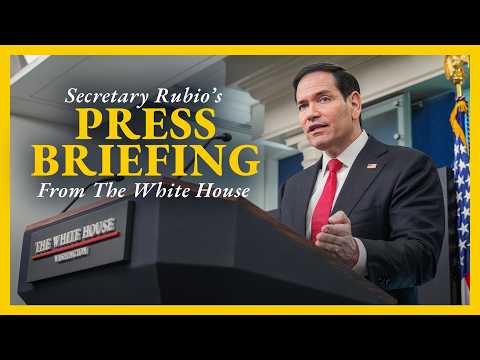
Secretary Rubio said the United States has begun "Project Freedom," a defensive operation to guide stranded commercial vessels through the Strait of Hormuz, citing the rescue of roughly 23,000 civilians from 87 countries and warning the U.S. will respond if its forces or escorted ships are attacked.
Secretary Rubio announced that the United States has launched "Project Freedom," a U.S.-led effort to escort commercial vessels through the Strait of Hormuz after what he described as an Iranian blockade left crews stranded.
Rubio told reporters the project’s immediate goal is to "rescue almost 23,000 civilians from 87 different countries" who are trapped at sea, and that U.S. military assets are providing a protective bubble for safe transit. "This is a defensive operation," he said, adding: "There’s no shooting unless we’re shot at first." He said two U.S.-flag merchant ships have successfully transited under the operation so far and described the effort as the first step toward reopening the strait.
Why it matters: The Strait of Hormuz is a critical artery for global trade; Rubio said roughly a quarter of the world’s oil trade passes through the strait. He framed the U.S. operation as aimed at restoring freedom of navigation and preventing any nation from controlling an international waterway.
Rubio listed the assets supporting Project Freedom as "guided missile destroyers, over a hundred land and sea-based aircraft, multidomain unmanned platforms, and 15,000 of the finest military service members on the planet." He said some Iranian fast boats have been targeted during maritime operations and asserted that seven fast boats “now sit at the bottom of the sea,” describing the boats as small, fast craft used to swarm larger vessels.
Rubio and reporters repeatedly stressed the operation’s defensive posture. "If no shots are fired at these ships and no shots are fired at us, we’re not firing shots," he said. "But if we’re fired on, we will respond, and we will respond with lethal efficiency." He said the United States will not broadcast operational details about who will transit and when, citing operational security, but promised to announce successful movements "after the fact."
The secretary also tied the maritime effort to stepped-up economic pressure on Iran. He said the naval protection will work in tandem with sanctions enforcement to "degrade Iran’s capacity to generate, to move, and repatriate revenue," and described the combined pressure as aimed at forcing Iran back to the negotiating table.
The operation is ongoing. Rubio said the United States expects to expand the protected transit corridor over time as confidence increases and as partner countries contribute in ways they can, while declining to identify which countries have offered help.
Ending: Rubio closed by urging international condemnation of attacks on commercial shipping and said the administration will pursue diplomatic channels, including the United Nations, alongside the naval effort.