Get Full Government Meeting Transcripts, Videos, & Alerts Forever!
Get email alerts on the Employee Health Benefits topic
No spam. Unsubscribe anytime.
Merrill Area School District staff propose WPS captive, Enovi primary‑care and MedOne pharmacy to blunt Aspirus rate shock
Summary
District HR and benefits consultants proposed moving employee coverage to a WPS captive that includes Enovi primary care and MedOne pharmacy management; staff said the package would average a 12% increase (vs an Aspirus quote above 36%) and would require board approval next week.
Heather Soberg, the district’s Director of Human Resources, told employees that recent claims trends and large carrier bids prompted staff to pursue alternatives to fully insured coverage and present a captive option to the Merrill Area School District board.
Soberg said the district’s stop‑loss ratio was about 91% last year but rose to roughly 108% at renewal this year; she said Aspirus returned a quote with “over a 36% increase,” which staff estimated could amount to roughly $1.7 million on the district side and close to $2 million overall. “Rather than simply paying more for the same coverage or the same service, let’s look at other ways,” Soberg said.
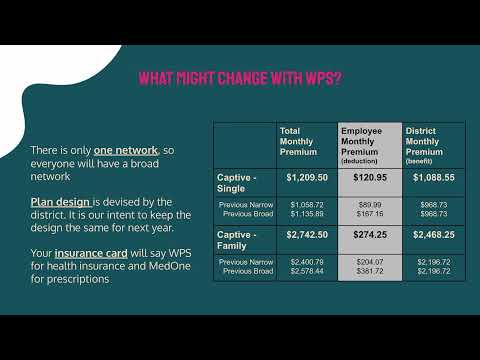
Under the proposal staff described to employees, the district would join a captive arrangement administered by WPS (Wisconsin Physicians Services) in the Alliance Network and would include Enovi primary‑care access and MedOne as the pharmacy benefit manager. Staff said the captive model pools premiums under participating employers rather than sending them solely to a large carrier, potentially producing greater transparency, some profit sharing and more control over plan design. Soberg cited an example captive that returned about $26,000 to each member in a profit year.
Staff presented a comparison of options and said the captive package being recommended would produce an overall plan‑cost increase of about 12% — the district’s current budget assumption for health costs — compared with the larger increases quoted by some carriers. Soberg said the best fully insured quote staff had found was Anthem at about a 14% increase; she said Aspirus’s quote was substantially higher.
The proposal would also consolidate networks into a single broad network through WPS. Staff cautioned that consolidation can raise premiums for employees who were previously on narrow networks, but they said the plan design would be set by the district and they did not intend to make major benefit changes in the first year. “We landed on 10%,” Soberg said when describing the blended employee contribution under the new proposal; staff said that figure represents a blended contribution rate after merging employees from different prior networks.
A key feature staff highlighted is Enovi’s model of team‑based primary care. Soberg said Enovi would provide zero‑dollar copays for annual wellness visits and longer, more coordinated primary‑care visits aimed at steering patients to lower‑cost imaging, labs and follow‑up care when appropriate. Staff said Enovi can accept records and coordinate with larger systems such as Aspirus and Marshfield Clinic with patient permission.
On the prescription side, staff discussed MedOne as a pharmacy benefit manager able to negotiate different supplier options; they gave an example where a specialty drug costing about $20,000 per person under one arrangement could be available through another supplier for roughly $4,000, producing material savings for the pool.
Employees asked about provider access and capacity, including whether Enovi would have enough clinicians if many district employees chose it; Soberg said Enovi hires to utilization and cited other local districts that have prompted additional clinic hires. Attendees also pressed staff for detail on how benefit changes would affect deductibles, copays and continuity of care. Staff repeatedly said they planned to keep the high‑deductible/HSA‑qualified design where possible and to avoid large benefit disruptions in year one, and they said specific plan documents and formularies would be finalized only after board approval.
Soberg closed by saying the committee would consider the item tonight and could recommend it to the full Merrill Area School District board next week; if the board approves staff would prepare detailed plan documents, host vendor representatives for open‑enrollment help and begin employee education. A target kickoff date for open enrollment was suggested as May 5, but Soberg said that date was tentative.
No formal motion or vote occurred during this employee session; the next formal decision point is the district committee and board process.