Get Full Government Meeting Transcripts, Videos, & Alerts Forever!
Get email alerts on the Social Services topic
No spam. Unsubscribe anytime.
Norristown Hospitality Center hearing draws hours of public testimony; board delays decision to May 26
Summary
The zoning board heard extensive testimony May 6 on a use‑registration appeal and variance for a proposed hospitality center at 449 E. Lafayette St. Supporters described case management, mail service and breakfast for hundreds; opponents raised concerns about crime, sanitation and parking. The board continued its decision to May 26 to consider the record.
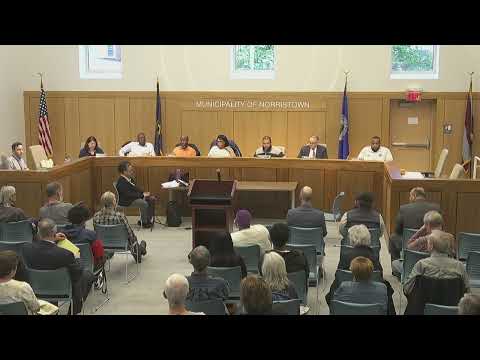
The Norristown Zoning Hearing Board on May 6 heard several hours of testimony and more than 30 public comments on an appeal and variance sought by the Norristown Hospitality Center for a proposed service hub at 449 East Lafayette Street. After presentations and extended public comment both for and against the proposal, the board voted to delay its decision until its May 26 meeting.
Attorney Guy Villum opened an appeal of a February 2026 denial of the center’s use‑registration application and presented the center’s case. Executive Director Sandanda Charles described the agency’s service model: mail service used by approximately 550 people, intensive case management, a weekday breakfast program that serves roughly 70–80 people at peak, legal and health clinics and partnerships with about 16 community agencies. Charles said the center would operate weekdays, roughly 7 a.m. to 3–4 p.m., would not provide overnight shelter at this site, and would not increase client enrollment.
“We are not an overnight shelter. It will not be open late at night. It is not an unsupervised drop in space,” Charles told the board, describing staff supervision, sign‑in procedures and plans to hire security staff to patrol inside and around the property during operating hours.
Supporters in the room and at the podium — including social‑service providers, volunteers and people with lived experience — said the center provides essential connections to benefits, medical and housing services that reduce unmanaged activity in public spaces. Robin Campbell, who identified herself as a nonprofit worker, said: “Please do not deny our homeless population this measure of dignity.”
Opponents urged caution. Several nearby residents and property owners cited worries about parking, sanitation, loitering and property crime if services attract larger daytime concentrations. One commenter argued the proposal could undermine Lafayette Street’s revitalization efforts without stronger guarantees on security and after‑hours behavior.
Board members questioned operations, security plans, volunteer oversight and how the center would manage high‑activity days such as the Holy Savior Club’s summer event. The applicant said it had met with neighbors, proposed a neighborhood advisory group and planned to rent additional parking when needed.
After hearing the testimony and public comment, the board voted to continue its decision to the May 26 meeting to allow members to consider the record and any follow‑up materials.
What happens next: the board will reconvene May 26 to decide whether to reverse the denial of use registration or to grant a variance; the center and neighbors may submit additional materials before that date.