Get Full Government Meeting Transcripts, Videos, & Alerts Forever!
Get email alerts on the Economic Development topic
No spam. Unsubscribe anytime.
Pine Island details Project Skyway data center, tax‑abatement terms and sanitary district progress
Summary
Pine Island city administrator Elizabeth Howard told the county board that a proposed 482‑acre "Project Skyway" data center would start with a phase just under 300,000 sq ft and include tax‑abatement terms tied to job creation and property‑tax thresholds; the city also reported near‑complete sanitary district engineering and a pending state bonding request.
Elizabeth Howard, Pine Island city administrator, told the Olmstead County Board that the city is processing a large industrial proposal known locally as Project Skyway and has structured tax‑abatement and community payments meant to secure local benefits.
Howard said the first platted phase of the 482‑acre site includes a data center just under 300,000 square feet and a 30,000‑square‑foot office, and that the developer estimates the phase would bring “approximately 100 full‑time on‑site permanent jobs.” She added that the city’s abatement agreement sets lower job‑creation thresholds for phase one — about 38 required jobs — while the developer’s estimate reflects potential hiring for future phases.
Why it matters: the project is large enough to trigger state permitting and regional infrastructure questions. Howard told the board the project has cleared local land‑use steps but must still obtain multiple state approvals, including from MIDOT, MDH, DNR, MPCA, the PUC and the Department of Labor and Industry.
Howard outlined how the abatement works in practice: the city structured the deal so the abatement would not kick in until the city first received specified property tax revenue thresholds (about $500,000 on the south portion and $500,000 on the north portion). She said the abatement applies across the 482 acres, includes a phased timeline, and that the city uses caps so the developer would receive an abated portion of taxes (Howard said the abatement rate is structured at 85% subject to the statutory cap on taxable value). She also said the agreement includes annual payments to the school district that the city estimates at about $23 million over 28 years and a community betterment fund of roughly $3 million over the agreement’s life.
Howard acknowledged controversy in public comment and in media headlines that have summarized the abatement as $36 million. She asked the board and the public to consider how tax abatement mechanics and added tax base interact: “It’s a really complicated system,” she said, noting the city expects to receive more tax revenue over time than it gives back after growth is realized.
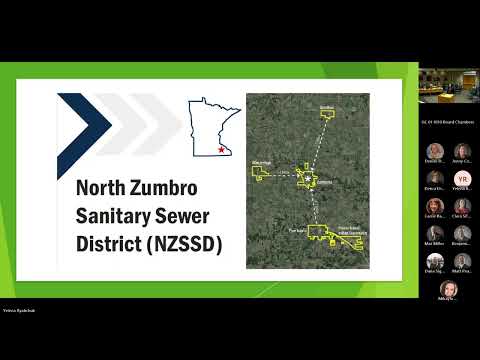
Howard also updated the board on a separate infrastructure item: plans and engineering for a sanitary district consolidation are roughly 90–95% complete and have been submitted to the MPCA; the project is moving through the Environmental Assessment Worksheet process and the city has submitted a bonding request to the state to fund construction if the bonding dollars are approved.
Board Q&A focused on job numbers, abatement length and local receipts. Howard said the city imposed a 28‑year overall sunset across the project, with phased time limits for parts of the campus, and that the abatement was designed so the developer would not receive abatement payments until the city first sees the agreed minimum tax revenues. She also said the school district declined to participate in the abatement, which under state statute allowed the city to extend certain timelines; because the school did not opt in, the city negotiated direct payments to the district within the agreement.
What’s next: Howard said permitting remains with state agencies and that securing bonding funds is needed to begin sanitary‑district construction; the city will continue public outreach and state‑level permitting work before any construction begins.