Get Full Government Meeting Transcripts, Videos, & Alerts Forever!
Get email alerts on the Recovery Court topic
No spam. Unsubscribe anytime.
Local recovery court reports 11 participants, seeks continued opioid-abatement support
Summary
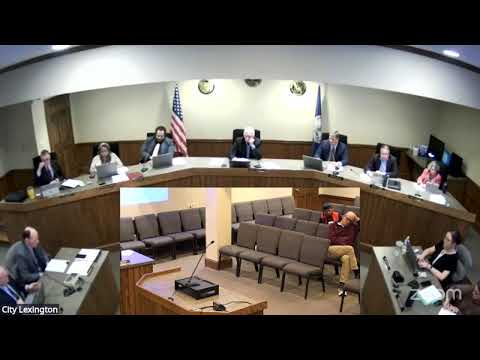
Prosecutor Josh Elrod and Deputy Public Defender Teresa Harris told Lexington City Council that the recovery court, now approaching its first year, serves 11 participants and relies on a coordinator funded by opioid-abatement dollars; officials said partnerships with Blue Ridge Court Services and Hope House have been critical and that program graduations are expected after roughly 13—18 months.
Josh Elrod, a local prosecutor, told Lexington City Council that the recovery court launched in June of last year and currently carries 11 participants, with four more likely to join in the near term. “Were almost at a year and we have 11 current participants,” Elrod said, adding that the team initially expected a cap near 20 participants and is encouraged by demand and early results.
Deputy Public Defender Teresa Harris described the courts partnership model and day-to-day supports, including weekly Tuesday dockets at the Rockbridge County Courthouse, referrals to Rockbridge Recovery for NA/AA meetings and housing assistance from the Hope House. Harris said the program integrates legal oversight with social supports: “It is extremely heartwarming to watch people be vulnerable, to be open to discussions and to kind of put out there their needs as well as their accomplishments.”
Elrod and Harris credited a coordinator position with keeping participants connected to services and monitoring court requirements; the coordinator role has been funded in part with opioid-abatement dollars the council allocated. Council members asked about scalability and barriers: Elrod said the program could expand but cautioned that some participants are disqualified for legal reasons and that additional resources would be required to grow beyond the 20-person target. Harris and Elrod noted practical hurdles such as transportation to morning dockets and the cost of home electronic monitoring for many defendants.
Officials described the programs phased structure and the variable time to graduate: most participants are taking about 13 to 18 months to reach graduation milestones, although individual trajectories vary. Elrod highlighted coordination with Blue Ridge Court Services and named Kyla Dyer as the current coordinator, calling her work “phenomenal.”
Council did not take formal action but received the update and signaled continued interest in funding and program evaluation as part of broader discussions about alternatives to incarceration and potential jail expansion.