Get Full Government Meeting Transcripts, Videos, & Alerts Forever!
Get email alerts on the Student Voice topic
No spam. Unsubscribe anytime.
Student advisory council to have a regular public role at Clay County school board meetings
Summary
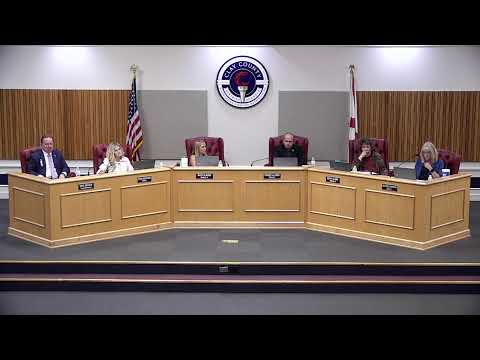
Taylor White, chair of the Superintendent Student Advisory Council, told the May 7 board meeting that the district will create a formal, recurring channel for student voice at school board meetings, a change Superintendent David Broski and staff described as intended to strengthen student representation.
Taylor White, chair of the Superintendent Student Advisory Council, told the Clay County School Board on May 7 that the council will establish “the district’s first official public relationship between the student body and the school board,” with students appearing to share perspective at every school-board meeting going forward.
Kelly Watt, chief of staff, introduced the 12 graduating seniors and described the council’s purpose as bridging district leadership and the classroom. “When students are given ownership, they rise to the occasion,” Watt said, praising the council’s role in advising district leaders on user experience of student information systems and on mental-health and social-media concerns that affect students.
In his remarks, Superintendent David Broski celebrated the students’ work and presented Florida Prepaid scholarships to student recipients. Taylor White said the council worked to ensure student voice is substantive and not symbolic, and described recent topics including the district’s student-information-system transition and student mental-health concerns.
Why it matters: The board’s decision to permit regular student presentations gives student leaders a formal public channel to communicate concerns and feedback directly to district policymakers, potentially influencing future policy and operational decisions.
What happens next: The board and district will implement the announced approach to include student perspectives at future meetings; no formal vote was required to accept the presentations announced May 7.