Get Full Government Meeting Transcripts, Videos, & Alerts Forever!
Get email alerts on the Financial Statements topic
No spam. Unsubscribe anytime.
Bossier Parish finance committee reviews fund balances, ESSER carryover and child nutrition pressures
Summary
CFO Nisha Bamberg told the finance committee that the general fund ends FY25 with about $135.2 million (≈$57.4M unassigned), ESSER spending shifted costs into the general fund, the child nutrition fund improved but may still need a modest transfer, and the self‑insurance fund is recovering after reinsurance proceeds.
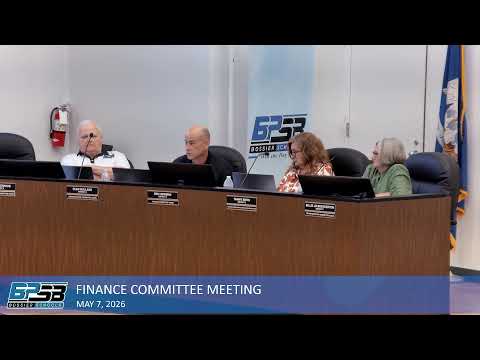
At the May 7 finance committee meeting, Chief Financial Officer Nisha Bamberg reviewed February and March 2026 financial statements and summarized key fund positions and revenue drivers.
Bamberg said the district has received the majority of ad valorem taxes for the year and that interest income remains a material revenue source, though returns have fallen from the prior banner year because market rates declined. She said the state MFP and other state grants are within projections. Sales‑tax receipts are showing year‑to‑date growth of roughly 6.8–7% over the prior year, with some monthly volatility.
The district’s general fund had $135.2 million in ending fund balance for the year ended June 30, 2025, the auditors reported; roughly $75 million of that was committed and about $57.44 million was unassigned (approximately 20% of annual general‑fund expenditures). Total general‑fund revenue for FY25 was $298.7 million, a $1.5 million decline from the prior year driven by state MFP and local revenue changes; total general‑fund expenditures were $283.3 million (an $11.8 million increase), in part because ESSER spending moved into the general fund as federal grants expired.
Bamberg highlighted that the Bossier Educational Excellence Fund had $73.6 million at June 30, 2025, of which $4.5 million was available for instructional enhancements and the remainder is a permanent fund that cannot be used by the school board. She noted the student‑activity accounts rolled up to $6.3 million and the district’s nonmajor governmental funds collectively had an increase of $1.4 million.
On the child nutrition program, Bamberg reported year‑to‑date expenses exceed revenues by roughly $554,000 as of March, but that position is an improvement over the prior year. The program moved from an $803,000 deficit at year‑end to a positive $47,000 after a general‑fund transfer in the previous year; Bamberg estimated a conservative end‑of‑year additional transfer in a $500,000–$700,000 range is possible but did not commit. She said the district is trying to minimize future transfers and is running school‑level profitability analyses to reduce losses at paying schools.
Bamberg also reported that the internal service/self‑insurance fund showed a positive month in March after a year of swings; reinsurance proceeds accounted for an operating revenue increase and after transfers the fund’s deficit decreased from $14.3 million to $5.9 million.
Board members asked for additional school‑level data on meal purchases and the CFO agreed to provide more granular analytics on student meal participation and the financial impact at the individual school level. No formal action was taken on the financial statements because they were presented for discussion only.