Get Full Government Meeting Transcripts, Videos, & Alerts Forever!
Get email alerts on the Land Use Subdivision topic
No spam. Unsubscribe anytime.
Planning board approves four‑lot subdivision of former Merc site amid public outcry over potential data center
Summary
Kenilworth's planning board on April 28 approved a conforming four‑lot subdivision of the 2000 Galloping Hill Road property, drawing hours of public comment alleging inadequate notice and raising water, noise and transparency concerns tied to a proposed CoreWeave data center listed in the borough's redevelopment plan.
Kenilworth's Planning Board approved a conforming four‑lot subdivision of the former Merc property at 2000 Galloping Hill Road on April 28, despite hours of public comment urging the board to delay action until residents could review any site‑plan materials tied to a proposed CoreWeave data center.
The board's vote followed testimony from the applicant's team that the filing seeks only to divide the land; attorney Steven Hail told the board the application "is only for the land, just for separating the parts of the land," and that no site plan or variance relief was part of the submission. Board professionals told the members the subdivision met the borough's redevelopment‑plan standards and technical checklist.
The vote came after a lengthy public‑comment period in which scores of residents pressed for more transparency and technical study. "This raises the question whether the true scale or impact of the overall project is being segmented in a way that avoids stricter oversight," resident Britney Larosa said, urging the board to scrutinize whether dividing the parcel could enable piecemeal approvals.
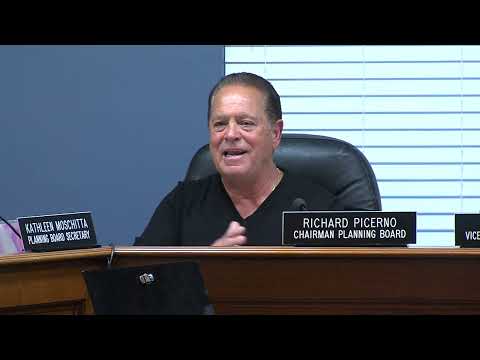
Chair remarks framed the board's legal role: "No decision will be based on information outside of what is presented on the record during this meeting," the presiding official said during opening remarks, emphasizing that site‑specific development proposals and technical studies are reviewed in future, separate proceedings.
Planner Kevin O'Brien, who introduced the master‑plan update earlier in the evening, said the borough's redevelopment plan permits a range of uses on the property and that any future site‑plan application would carry a fuller review. "I served as borough planner here for 30 years," he said while summarizing the master plan's 11 elements, which will be posted before a May 19 public hearing.
Residents repeatedly asked when and how the public would be notified about any site‑plan application tied to a data center; board staff and counsel said standard notice procedures apply (mail to property owners within 200 feet, public posting and municipal website posting at least 10 days before a hearing) and that any future application would return to the planning board on noticed agenda. Several commenters also alleged construction and utility work were already underway at the site; board officials reiterated that those operational questions are separate from tonight's subdivision review.
Public concerns extended to long‑term technical and health questions that speakers said must be resolved before construction: potential water demand from closed‑loop cooling systems, local stormwater impacts, traffic and electrical upgrades, and low‑frequency noise that residents said they had already heard. Board professionals responded that those subjects are examined during site‑plan review and through state permitting (for example, remediation and LSRP oversight if contamination is found).
After professionals and the applicant confirmed technical comments would be addressed and that the subdivision complies with the redevelopment plan's bulk standards, a motion to approve the subdivision passed on a roll‑call vote. The board recorded the application as conforming and granted the requested preliminary/final major subdivision.
What happens next: subdividing the land does not itself authorize construction. Any developer wanting to build — whether a data center or another permitted use listed in the borough's redevelopment plan — must submit a separate site‑plan application, supply the required technical reports (stormwater, noise, traffic, remediation/LSRP as applicable), and appear at a public hearing on notice. Residents and stakeholders asked the board and municipal staff to broaden outreach and to post future filings prominently on the borough website.
The board adjourned after completing votes and standard closing remarks; several residents left the meeting expressing frustration that tonight's approval did not settle the larger community questions about the site's future.