Get Full Government Meeting Transcripts, Videos, & Alerts Forever!
Get email alerts on the Public Health topic
No spam. Unsubscribe anytime.
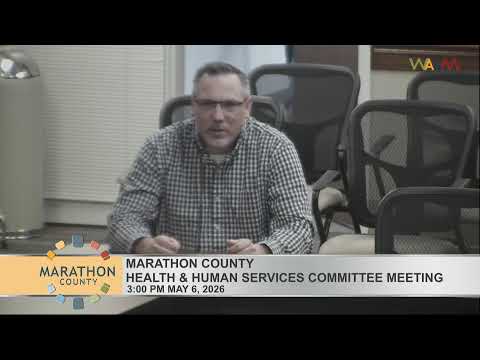
Marathon County health officer outlines department programs, tick kits and new homelessness position
Summary
Health Officer Caitlyn Suginaka told the Health & Human Services Committee the department oversees roughly 1,200 environmental licenses, is monitoring a rise in tick-related emergency visits and has launched free public vending machines stocking tick kits and other harm-reduction supplies; she also described a new homelessness systems-response FTE and HUD-supported lead mitigation work.
Health Officer Caitlyn Suginaka told the Marathon County Health & Human Services Committee that the Health Department’s mission is to advance community health by preventing disease, promoting healthy behaviors and protecting the public from environmental hazards. She described a three-branch structure — environmental health, nursing (communicable disease and family health) and community health improvement — staffed by about 37.6 FTE, roughly 40 employees.
Suginaka said the department issues and supports more than 1,200 licenses for businesses such as restaurants, hotels, campgrounds and pools, and that much of that environmental-health work is intended as partnership and education rather than sole enforcement. She highlighted recent surveillance showing an uptick in emergency-department visits tied to tick exposure and said the department has responded with public education and by stocking free tick kits in public “vending machines” funded initially through a state grant and now replenished by partner contributions. “Anyone in our community could go and get a tick kit,” Suginaka said.
The health officer described evidence-based family programs including a Nurse–Family Partnership that has now produced its first graduates. She said the county added a homelessness systems-response position after a task force identified homelessness as a systemic need, and that the department is partnering with local and regional service providers to coordinate services.
Suginaka also discussed the department’s radon-information role and partnerships with the city for HUD-funded lead mitigation in homes, noting those projects seek to make housing safer for families. On outbreak preparedness, she said Marathon County maintains emergency plans, a staffed public-health emergency preparedness program and routine training exercises; staff would reallocate personnel to respond to short-term events and coordinate with state partners for larger-scale incidents.
The department’s budget materials (in the committee packet) show the health department’s 2026 gross costs are roughly $5 million, with about half supported by tax levy and sizable intergovernmental grant revenue and public charges (fees) covering much of environmental-health activity. Administrator Leonard and committee members emphasized that some grant-funded work is recurring and built into the budget, while new or unusual grants are brought to the committee before acceptance.
The committee asked several clarifying questions about the vending machines’ locations and stocking; Suginaka said she would confirm exact sites but identified one at the community partners campus and another likely at Health First, and explained they dispense free harm-reduction and public-health supplies rather than accepting cash. The presentation concluded with committee members thanking the health officer for the overview and the department’s work.