Get Full Government Meeting Transcripts, Videos, & Alerts Forever!
Get email alerts on the Historic Preservation Clg topic
No spam. Unsubscribe anytime.
Punta Gorda moves to pursue Certified Local Government status; board to meet monthly to finalize inventory and ordinance
Summary
City staff and the Historic Preservation Advisory Board agreed to pursue Certified Local Government designation, task members with updating the historic inventory using zone-based reviews and templates, and asked staff to draft a preservation ordinance for city-legal review; no formal vote was taken.
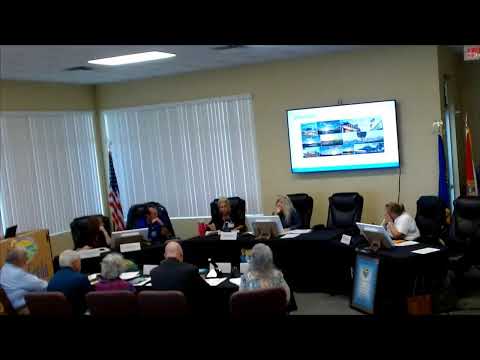
Punta Gorda City officials and members of the Historic Preservation Advisory Board on April 7 agreed to pursue designation as a Certified Local Government, a federal-state program that can unlock grant funding and give the city a formal role in historic-preservation reviews.
Adriana Gerie, Planner One, told the joint meeting that a CLG “is a city or county that has formally made historic preservation part of its public policy,” and noted the program’s origin in the National Historic Preservation Act and partnership with the state historic preservation office and the National Park Service. She told the panel CLG status makes the city eligible for federal historic-preservation grants and technical assistance and permits local review of National Register nominations.
Board members raised concerns that the city’s existing inventory of historic resources is incomplete. “I came at this with a copy of a 1999 survey that was pretty thorough,” said Terry Ziggler, who said he also reviewed a 2016 inventory and a separate 14-page properties list; he said some entries were out of date and that updating the list will require substantial manpower.
To avoid Sunshine Law risks and accessibility problems with block-by-block walking surveys, staff recommended a stationary, zone-based approach. Gerie and other members proposed using standardized, fillable forms and photographs (and limited video in select cases) so volunteers and staff can compile consistent records for later public discussion at meetings. “Public access is a big concern with the Sunshine,” Gerie said, listing ADA, heat and restroom access as practical obstacles to moving, on-site tours.
Charlie Noble suggested capturing short video of single blocks for later review. Staff and members replied that still photos and existing PowerPoint files could be used first, and that staff capacity to shoot and edit footage is limited.
The board and council signaled consensus that the Historic Preservation Advisory Board should add regular special meetings focused on inventory and ordinance work to move the effort forward without overburdening staff. Staff will work with members to set a regular day and time; council and board members discussed holding the extra session about two weeks before the board’s regular meeting so drafts can be refined for legal review.
Members also discussed transitioning the HPAB from an advisory to a decision-making body as part of the CLG process. Board members were told that would require drafting ordinance language and bylaws, then submitting those materials to the city attorney and the state historic preservation office for review before any formal action is taken.
Funding for preservation activities also drew discussion. Ideas included modest increases to existing fees (for example, the certificate-of-appropriateness fee), making demolition fees a percentage of a building’s appraised value (one member suggested 0.5% as an example), and pursuing CLG grant allocations. Staff cautioned that recent state legislation imposes limits on how some permit fees are justified and that building‑fund restrictions should be checked before dedicating specific revenue streams.
Council members and board members asked staff and the board to gather example ordinances from nearby municipalities that have completed the CLG process (Venice and Sarasota were cited) and to prepare a recommended draft for the city attorney’s review. Staff said a paralegal and planning staff can assemble sample language and that the city attorney would ultimately review any proposed ordinance.
Finally, a council member reported a Freeman House volunteer event with CBI scheduled for April 25. No formal vote or ordinance adoption occurred at the meeting; the next steps are for the board to prepare the inventory templates and a draft ordinance and for staff to schedule the additional meetings and obtain legal review.