Get Full Government Meeting Transcripts, Videos, & Alerts Forever!
Get email alerts on the Wildlife Center topic
No spam. Unsubscribe anytime.
Council extends Peace River Wildlife Center buildout deadline to Jan. 1, 2027 after environmental audit and fundraising update
Summary
After extensive public comment and a presentation from the wildlife center’s attorney, the Punta Gorda City Council approved an amendment extending the Peace River Wildlife Center’s phase‑one buildout deadline to Jan. 1, 2027, while asking staff and the nonprofit to keep open lines of communication about lease terms, funding and environmental findings.
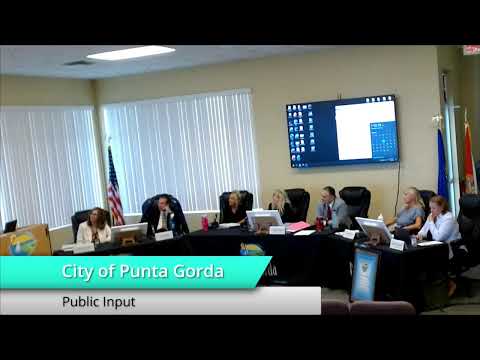
The Punta Gorda City Council voted April 8 to extend the Peace River Wildlife Center’s phase‑one buildout deadline to Jan. 1, 2027, after hearing from the center’s legal and program leadership about fundraising, cost overruns and results of an environmental audit.
Ed Watitzky, an attorney representing the wildlife center, told the council that the nonprofit has raised more than $3.6 million in donations and pledges and has already invested roughly $2 million in site preparation and soft costs. He said the organization had obtained a bridge loan to assure contractors of near‑term funding but that a bank‑requested environmental review uncovered traces of PFAS chemicals from prior site uses at levels that required a Phase II audit. "The Phase II audit...confirmed the presence of the PFAS," Watitzky said, and the center engaged environmental counsel to advise on next steps.
Trisha LePoint, the wildlife center’s executive director, and several volunteers and supporters described the organization’s rescue, rehabilitation and education work and urged council to allow more time to complete permanent facilities. Supporters emphasized the center’s role caring for hundreds of animals annually and its visitor draw for downtown businesses.
City staff and councilors pressed for specifics about the environmental findings, possible limitations, and whether the presence of PFAS would require remediation or restrict site uses. Watitzky said counsel advised there was "no need for self‑reporting" given the low levels detected, but added that the center would not extract groundwater on site and that the Phase II study had identified constraints the nonprofit would follow.
Council members also discussed the lease terms, the center’s long‑range plans for a phase‑two parcel, and the impacts of recent hurricanes that had diverted staff time and funds. City Manager Melissa Riker and other staff signaled openness to revisiting lease provisions if circumstances change, and councilors agreed to keep communication lines open while the nonprofit completed construction.
Following discussion, a motion to approve agenda item 6A and extend the buildout deadline to Jan. 1, 2027 carried. The council asked staff and the nonprofit to update the record and said it would revisit lease terms or related issues in the future if necessary.
What the council approved - Action: approval of agenda item 6A to amend the ground lease/buildout schedule. - Outcome: extension of the phase‑one buildout deadline to Jan. 1, 2027; motion carried (vote counts not specified in the transcript). - Follow‑up: staff to remain in contact with the center to monitor construction progress, funding status, and any regulatory developments; council suggested a future review window (discussed informally around an 18‑month revisit).
Why it matters The extension preserves the nonprofit’s path to a permanent facility after hurricanes, unexpected site cleanup costs and a bank‑requested environmental review interrupted an earlier schedule. City and center leaders framed the decision as a stewardship move: the city retains long‑term interest in public land and infrastructure while allowing a community nonprofit to secure financing and finish construction.
What remains unresolved Council sought clearer documentation about the PFAS findings and their operational implications, though the center’s counsel described the contamination as limited and manageable under current plans. The precise financial and operational arrangements for phase two of the project — including whether the city would ever need to repurpose the parcel for flood mitigation — remain subjects for future conversation.