Get Full Government Meeting Transcripts, Videos, & Alerts Forever!
Get email alerts on the Budget topic
No spam. Unsubscribe anytime.
Hagerstown officials flag $10 million structural deficit while proposing no FY2027 tax-rate increase
Summary
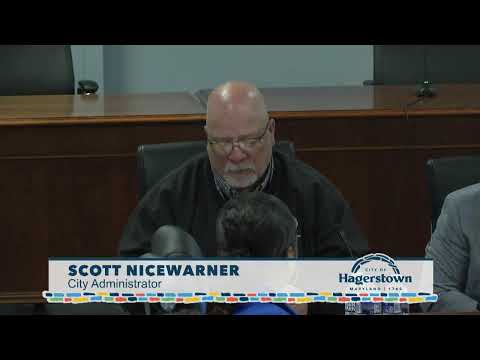
City Administrator Scott (Scott Nice Warner) told the Hagerstown mayor and city council on April 7 that the FY2027 budget includes no proposed tax-rate increase but leaves a $10 million structural deficit, prompting calls for multi-year planning, revenue modernization, and possible city–county cost‑sharing.
City Administrator Scott (Scott Nice Warner) presented the city’s FY2027 budget message at an April 7 work session, saying the proposal includes no tax‑rate increase for FY2027 but that Hagerstown enters the year with a roughly $10 million structural deficit.
Warner told the council the city balanced FY27 without raising the tax rate, in part because assessed values are estimated to rise, but warned that ‘‘the city’s ongoing revenues are not keeping up with its ongoing expenses,’’ and that structural deficits do not fix themselves. He said assessed-value revenue growth for FY27 is estimated at 9.3%, and property taxes still account for about 70% of the city’s current revenue mix.
The presentation listed drivers of the deficit: rising fixed costs such as pension and health‑care obligations; a narrow tax base concentrated in real and personal property; volatility in state funding; and aging infrastructure that requires capital reinvestment. Warner recommended a layered response that includes modernizing fees, expanding the tax base through targeted economic development and annexation, exploring regional cost‑sharing with Washington County and other municipalities, and conducting a full operational review to eliminate redundancy.
Chief Financial Officer Michelle Heurn and accounting/budget manager Brook Garber briefed councilmembers on budget details distributed at the session. Staff said the packet includes a 42‑page budget message and a short memo summarizing primary funds. The presentation notes $3.8 million of fund‑balance use to balance FY27, with $1.66 million identified as prior years’ reserved funds; staffing is essentially unchanged for full‑time positions, with most adjustments expected on the part‑time side.
Warner urged the council to begin FY28 planning immediately, stressing multi‑year financial planning and process modernization to avoid deferring capital projects and innovation. He outlined a draft schedule: follow‑up budget work sessions April 14 and 21, an enterprise‑fund session May 5, a public hearing and ordinance introduction May 12, and a final vote on the budget and tax rate on May 19.
What happens next: staff will present detailed general‑fund and capital‑improvement plan (CIP) materials at the upcoming April sessions and bring utility and enterprise fund proposals in May. Councilmembers raised no formal motions during the presentation; the budget will return for additional review at scheduled work sessions.
Ending: The council received the presentation and the accompanying materials and set follow‑up dates for detailed fund reviews and the May public hearing.