Get Full Government Meeting Transcripts, Videos, & Alerts Forever!
Get email alerts on the Budget Taxation topic
No spam. Unsubscribe anytime.
Debate over meals and lodging tax rises as Rappahannock supervisors adopt FY2027 budget and CIP
Summary
After a lengthy public hearing where small lodging operators warned a higher lodging tax would hurt local businesses, the Rappahannock County Board advanced a package including land‑use fee increases and adopted the FY2027 budget, advertised tax rates and the five‑year CIP; supervisors debated delaying a vote to gather more business input.
Rappahannock County supervisors spent more than three hours on a public hearing and debate over proposed amendments to Chapter 151 (taxation) — including a proposed rise in the meals tax from 4% to 5% and a lodging tax increase proposed from 4% to as high as 10% — before approving the FY2027 budget, the advertised tax rate and the county's 2027–2031 Capital Improvement Plan.
County staff opened the hearing by describing four elements of the draft ordinance: (1) codification of previously passed taxation provisions, (2) an increase in the land‑use valuation program application and revalidation fees from $60 to $140, (3) a proposed meals tax increase from 4% to 5%, and (4) a proposed lodging (transient occupancy) tax increase from 4% to 10%.
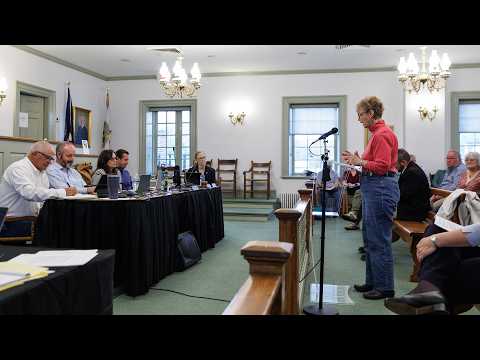
The hearing drew many local business owners and operators. "This lodging tax is not a tax on the tourists; it is a tax on the small business owners that run lodging establishments," said Olivia, a Pedmont business owner, arguing that locally owned inns and B&Bs could not absorb a steep tax increase and that a higher rate would make the county less competitive with neighboring Little Washington. Another owner, Brooke Perrell of Wakefield district, said the change could "devastate" her plans to invest in a building.
Several speakers urged the board to prioritize enforcement of land‑use compliance rather than raising rates. "Maybe somebody needs to be hired or appointed to look into what pieces of land are actually in land use and are abiding by the rules," one commenter said, citing suspected abuses in the land‑use program.
County finance staff presented revenue sensitivity numbers to help the board weigh options: "Every percent on meals is $90,000 in revenue. Every percent on lodging is $59,000 in revenue," the finance presenter told the board. Staff also explained that part of lodging and meals income is restricted for tourism promotion and that restricted and unrestricted portions affect how much new revenue is available for the general fund.
Supervisors discussed timing and fairness. Several members expressed discomfort with a jump from 4% to 10% on lodging but noted capital pressures — including school and courthouse needs — that the budget must address. They also repeatedly raised the unresolved issue that the Town of Washington levies different rates, creating a competitiveness question for county businesses located outside town limits.
Board members debated whether to delay the vote to allow more business owners to testify at the next regular meetings (May 11 or May 13). After weighing the statutory budget adoption schedule and state notice requirements for lodging tax changes, the board ultimately moved forward with motions to adopt the FY2027 budget, to adopt the advertised real‑property tax rate and to approve the CIP; the motions were seconded and adopted by roll call.
The board instructed staff to refine revenue projections and return with any necessary implementation details. Supervisors also pledged to continue engaging with the town council and local business groups on the equity question for lodging taxes and to follow up on land‑use compliance concerns. No immediate schedule for final ordinance language implementation was announced beyond standard statutory notice steps for lodging tax changes.