Get Full Government Meeting Transcripts, Videos, & Alerts Forever!
Get email alerts on the Hydrogen Policy topic
No spam. Unsubscribe anytime.
Senate hearing: industry, researchers and ports urge targeted state support to keep California’s hydrogen transition on track
Summary
Industry, transit and public‑health witnesses told a California Senate select committee that hydrogen is already deployed in buses, trucks and rail but that the loss of ARCHES federal funding, volatile fuel prices and permitting delays threaten near‑term projects; witnesses urged focused state funding, demand aggregation and permitting fixes.
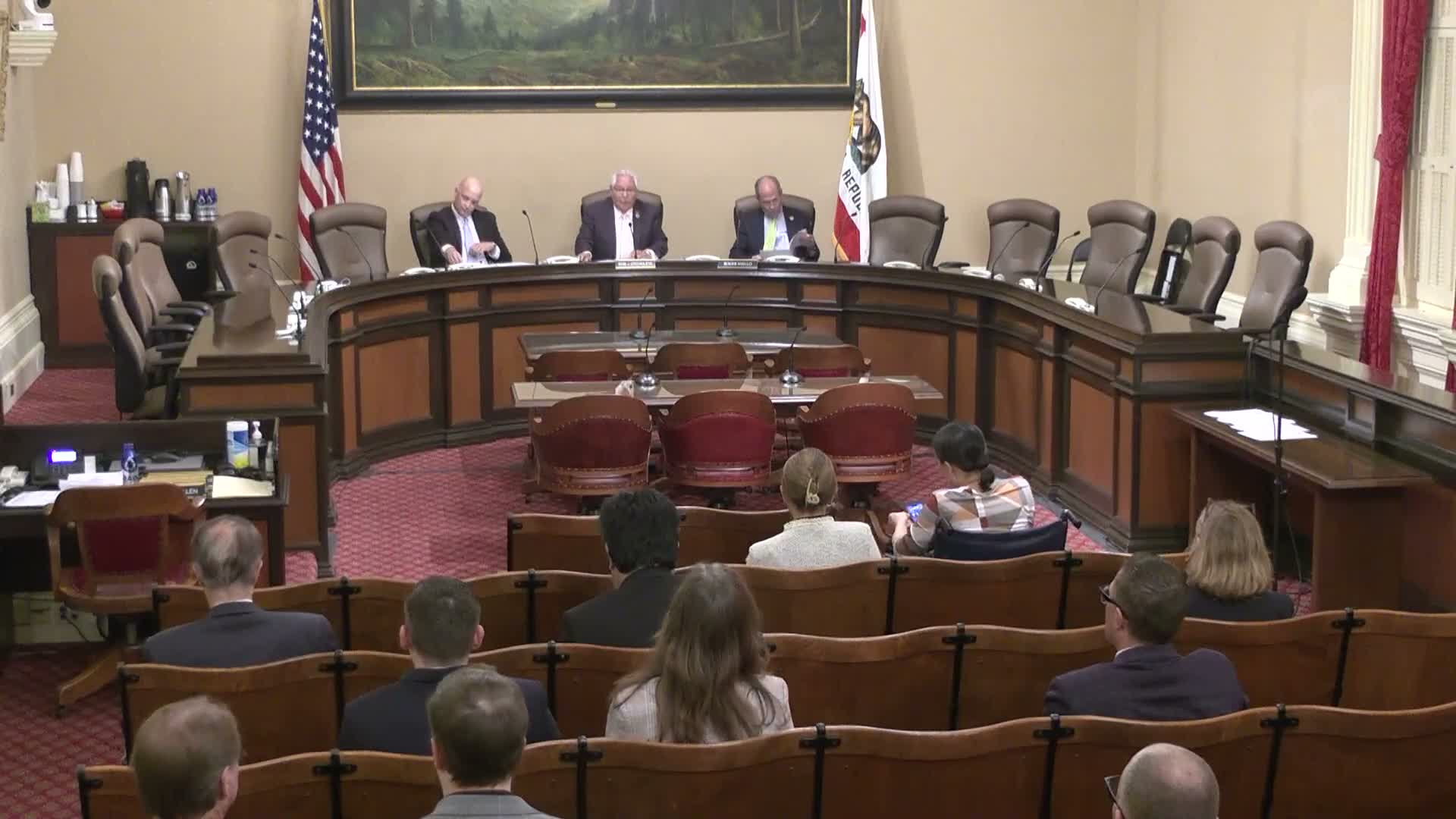
Senator Bob Archuleta convened a select committee hearing on hydrogen energy, where industry leaders, researchers, labor and public agencies described operational deployments and warned that federal funding disruptions and persistent infrastructure gaps risk slowing the transition.
The committee heard that hydrogen fuel‑cell buses, trucks and a prototype hydrogen freight locomotive are operating in California and that private and public actors are investing to scale the technology. "Hydrogen is not an either‑or proposition" for decarbonization, Katrina Fritz, president and CEO of the California Hydrogen Business Council, told the panel, adding it "complements electrification" in hard‑to‑electrify sectors.
Researchers and air‑quality officials urged surgical deployment in the most polluting corridors. Lin Jing, a research affiliate at UC Berkeley, said modeling projects a 43% reduction in smog‑forming NOx if hydrogen replaces diesel in targeted heavy‑duty uses, and estimated nearly 300 premature deaths could be prevented annually by 2045 from those deployments.
Panelists and transit agencies pressed the committee for state actions to replace lost federal support. SamTrans director Dave Harbor said his agency ordered 108 hydrogen buses and expects the remainder by mid‑2027, but faces a $33 million infrastructure gap after ARCHES was put on hold. "State partnerships will determine whether SamTrans can stay on track," Harbor said, urging the legislature to protect greenhouse‑gas reduction funds and consider reinstating a sales and use tax exemption for zero‑emission buses.
Industry witnesses asked for clearer, faster permitting and stronger demand signals to make projects bankable. Martin Herring of Bosch outlined three structural barriers: lengthy permitting processes, insufficient durable demand, and limited infrastructure including pipelines and fueling. Tyson Eckerley of GoBiz summarized two state priorities: "demand creation" and "cost reduction," and flagged permit streamlining bills and a GO‑Biz permitting guidebook update as near‑term actions.
Panelists also highlighted safety, equity and workforce considerations. Tung Yee of the California Air Pollution Control Officers Association said fuel‑cell vehicles emit water vapor at point of use and can reduce local toxic exposures, but cautioned that hydrogen production pathways matter and urged environmental‑justice safeguards, leak detection, emergency planning and early community engagement.
While witnesses described multiple pathways to lower delivered hydrogen costs (aggregation of demand, long‑term offtake contracts, scaling production and lowering delivery swings), several speakers warned that fuel price volatility and limited station networks remain practical obstacles for consumer adoption. Mikhail Skovar of the California Hydrogen Coalition said California currently has roughly 52 publicly available hydrogen stations and cited studies suggesting that about 1,000 stations would provide parity with current gasoline station access.
The committee received a broad set of policy suggestions—protect GGRF funding for transit capital, reintroduce targeted tax exemptions, accelerate permitting streamlining, prioritize corridor‑level infrastructure and promote demand aggregation such as joint public off‑taker arrangements. Archuleta closed by noting hydrogen is "an emerging part of California's clean air, clean energy and economic landscape," and opened the record to public comment.