Get Full Government Meeting Transcripts, Videos, & Alerts Forever!
Get email alerts on the Contracts And Oversight topic
No spam. Unsubscribe anytime.
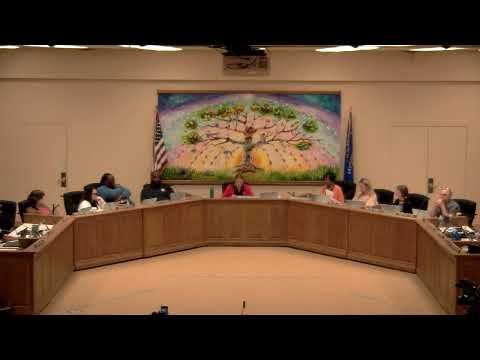
Board questions contract cuts, charter-related savings and alternative-school staffing; administration pledges task force and follow-ups
Summary
Directors pressed administration on how roughly $40 million in short-term charter-related savings and $6 million in contract reductions were computed, sought tighter procurement oversight, and raised alarms about cuts to alternative schools; administration pledged contract deep dives, a contracts task force and follow-up listening sessions for alternative schools before the budget vote.
Committee members asked detailed questions about the source and reliability of the district’s projected contract and charter-related savings and about the operational impact of staff reductions at alternative schools.
Administration clarified that a significant portion of near-term savings shown in the five-year forecast stems from non-district-authorized charter schools leaving the district; because state funding uses three-year averaging, the district will not pay the same contractual expenses and retains some revenue carry-forward in FY27. "That $40 million is the expenses that we're not having to pay," an administrator said, adding that other rising costs such as health benefits and transportation offset savings.
Directors pressed for greater procurement oversight, especially for repeated sub-$50,000 contracts that can aggregate into large vendor relationships. Director Zomberg and others urged a board-level task force; administration said staff have already conducted contract deep dives and will return in June with proposals for stronger controls, unit rates and pre-audit processes.
Several directors and school leaders raised the specific case of alternative high schools (Project Stay, Transition, Grappy), where centralized staffing and third-Friday enrollment modeling produced apparent staff reductions. Academic superintendent Aaron Shapiro described how half-day programming changes effective class sizes and said the administration will hold targeted listening sessions and supply additional staffing data before the board vote. "Any school that would be in a situation where additional staffing is needed to meet that standard of care, additional resources would be associated with those buildings," he said.
Office of Accountability staff told the committee the budget would use some fund-balance resources to remediate prior negative balances and that administration would come back with October adjustments after enrollment and state aid are finalized. Directors instructed administration to return with monthly actuals, a recommended fund-balance target and a contracts oversight plan ahead of fall adjustments.
No formal votes or motions were taken at the meeting; the administration will present follow-up materials in June and again at the October adjustment process.