Get Full Government Meeting Transcripts, Videos, & Alerts Forever!
Get email alerts on the Student Assessment topic
No spam. Unsubscribe anytime.
District assessment review flags early math and reading "hinge points" and persistent gaps in outcomes
Summary
Assessment director Jeremy Young presented multi-year analyses showing district gains in early math overall but a first-grade dip, persistent achievement gaps for English learners and students with disabilities, and proposed earlier interventions tied to specific screening submeasures.
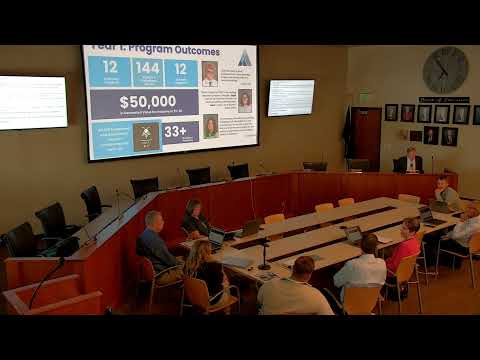
The Cache County School District presented a program evaluation of early math and reading outcomes on May 7, highlighting both gains and continuing equity gaps.
Assessment Director Jeremy Young summarized analyses of more than 10,000 students for early math and about 242,000 reading records accumulated over the district's reporting window. He told the board the district has seen roughly a 10-percentage-point increase in early math benchmarks across recent years but noted a consistent first-grade dip that warrants targeted attention.
Young emphasized early "hinge points" that predict later success: number identification fluency in kindergarten and computation benchmarks in first grade for math, and nonsense-word fluency and correct letter-sound measures for early reading. He said students below identified cutoffs (for example, fewer than 10 number IDs at kindergarten intake or below-threshold nonsense-word fluency in first grade) are at higher risk and should be prioritized for early intervention.
The audit also identified persistent gaps: the white/Hispanic gap in math narrowed but remained about 17 percentage points, and English learners and students receiving special education services showed larger performance gaps (reading gap for EL students cited around 44 percentage points). Young said the district will use the analyses to flag at-risk students earlier, align intervention timing and pair those steps with a newly adopted math curriculum piloted in some classrooms.
Board members asked about whether assessment changes, curriculum shifts or national benchmarking produce the first-grade dips; Young attributed some variation to assessment changes and to national benchmark-setting by the vendor. The district will adjust RTI (response-to-intervention) protocols and extend targeted phonics and number-sense interventions based on these findings.
Next steps: the district plans to implement earlier screening flags, refine intervention protocols and monitor pilot outcomes from the newly adopted curriculum in the coming school year.