Get Full Government Meeting Transcripts, Videos, & Alerts Forever!
Get email alerts on the Substitute Contract topic
No spam. Unsubscribe anytime.
Board presses staff on $2.8M substitute contract and options to bring guest-teacher program in-house
Summary
Board members raised concerns about the district's contract with ESS, questioned unusually high monthly figures and automatic renewal language, and asked staff to develop a phased plan and HR capacity to reduce contractor reliance.
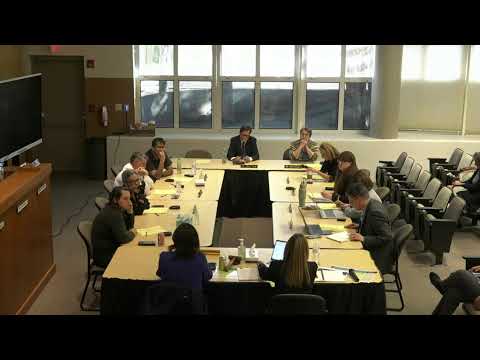
Santa Fe Public Schools board members used a study-session budget briefing to press staff on the district's substitute-teacher contract and to request a plan for reducing reliance on an outside agency.
Board members said they were uncomfortable with the district's current level of spending on substitutes. Legal counsel told the board the existing contract contains an automatic renewal provision and requires written notice at least 90 days before the end of the fiscal year to terminate, which limits options for an immediate exit. "We are kind of stuck into this contract for the next fiscal year," the district's legal counsel said, urging a phased approach and careful planning to avoid breach and litigation.
Why it matters: substitutes have direct classroom impact and the contract carries substantial recurring cost. Board members and staff identified two related priorities: (1) address the underlying rise in teacher absences to reduce demand for substitutes, and (2) create in-house capacity (a guest-teacher system) so the district can fill more positions directly and reduce agency fees over time.
Key points from the discussion: staff and board members reconciled substitute-day counts and clarified that an April-only data extract had inflated annualized cost estimates; district data showed thousands of absence requests in recent years with matching numbers of substitute fills. Janette Pekka, HR director, described barriers in hiring, including dual background-check processes and seasonal hiring peaks, and requested three HR positions (a generalist, a compensation specialist and an investigations specialist) to support recruiting, onboarding and investigations. The board discussed phased transition models other districts have used and asked staff to model outcomes (target fill-rate improvements, hiring timeline, and comparative costs).
Contractual constraint: legal staff emphasized the contract's automatic renewal clause and the 90-day notice requirement tied to the fiscal-year end. Board members asked legal staff to research whether the contract could be amended or renegotiated; staff said they would investigate amendment options while simultaneously preparing a phased plan to build in-house capacity.
Next steps: board members asked staff to return with a plan and metrics before the next renewal window. They also asked finance and HR to model scenarios that tie reductions in substitute agency spending to investments in HR capacity, targeted behavioral supports (deans of students and PBIS), and targeted incentives to increase teacher attendance.